 blog
What Are the Best EV Home Charging Station Features in 2026?
Last Updated: November 5, 2026
Quick Summary
The best EV home charging features start with a Level 2 unit delivering around 7 kW, matched to your car's onboard charger limit, plus dedicated circuit protection and licensed installation. Prioritise smart features like scheduled off-peak charging, solar mode and dynamic load management, and confirm firmware support and warranty before buying.
- A 7 kW home EV charger adds roughly 40 to 50 km of range per hour.
- A 7 kW charger typically needs a dedicated 32 A circuit sized for continuous load.
- Dynamic load management reads live household demand and steplessly adjusts charging power.
- Choose tethered for single-car homes and untethered for shared parking or multiple vehicles.
- Confirm how long firmware updates are guaranteed and whether security patches ship separately.
Table of Contents
- What Features Should You Look For in an EV Home Charging Station?
- Smart EV Charger Features That Change How You Charge
- Is a 7 kW Home EV Charger Enough for Daily Driving?
- Solar EV Charging and Home Battery Integration
- Tethered vs Untethered EV Charger: Which Suits Your Home?
- Load Management, Switchboard Capacity and Installation Requirements
- Warranty, Software Support and Long-Term Ownership Costs
- Book a Licensed EV Charger Installation Assessment
- Frequently Asked Questions
What Features Should You Look For in an EV Home Charging Station?
Choosing the best EV home charging station features starts with two things: how much power the unit delivers and how safely it handles that power. Everything else, from apps to cable length, sits on top of those foundations.
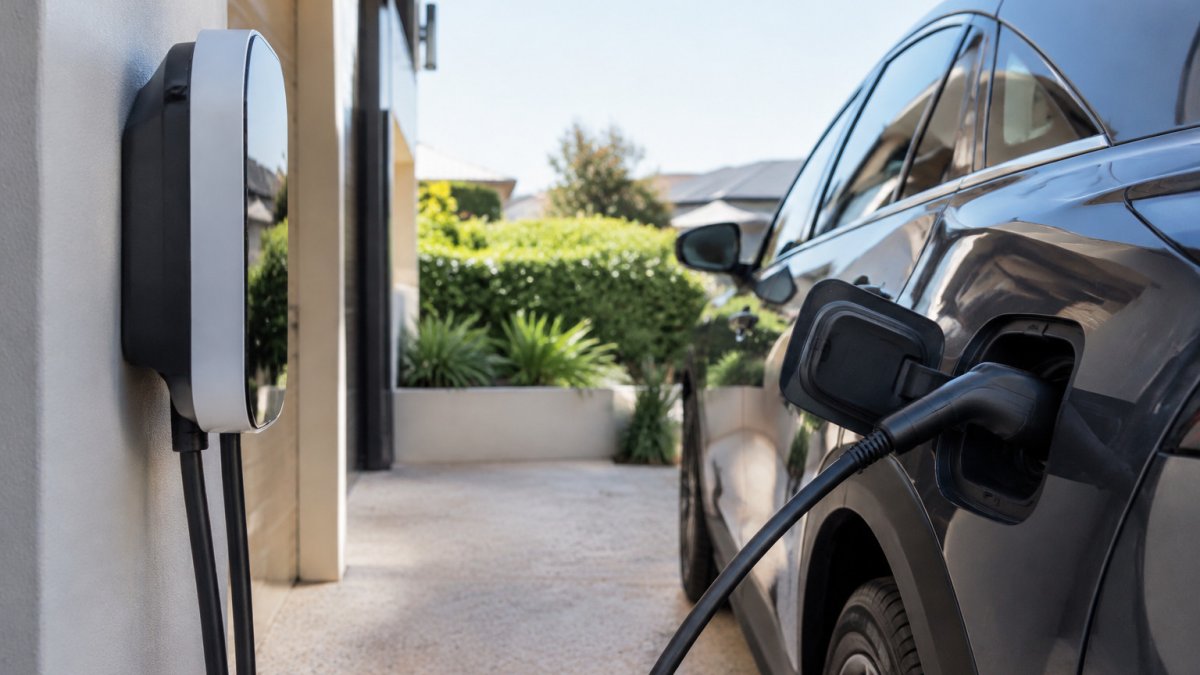
Homes and businesses installing an EV charger tend to ask the same questions. Will it charge fast enough overnight? Is it safe on an older switchboard? Does it work with solar?
Power Output and Level 2 Charging Speed
Level 2 charging is the common choice for home use: an AC charging station wired to a dedicated circuit, typically delivering around 7 kW. Check the charging rate your own vehicle supports to see how quickly it will charge overnight.
The practical number to check is your car's onboard charger limit. If the vehicle only accepts 7 kW, buying an 11 kW or 22 kW station gains you nothing at home. Match the charger to the car, not to the brochure.
Safety and Electrical Protection
A home charging station is a piece of fixed electrical equipment running for hours at high current. It needs proper protection: a dedicated circuit breaker, residual current protection, overcurrent protection and a weather-resistant enclosure if it is mounted outside.
Watch out: a charger wired into an existing general-purpose circuit rather than a dedicated one can be a fire and shock risk. This is not a DIY job, and licensed installation with a certificate of electrical compliance is the baseline.
Smart EV Charger Features That Change How You Charge
Smart charging is where the biggest practical gains sit, but "smart" is not a single feature. A Wi-Fi connected charger with a mobile app lets you schedule charging for off-peak electricity rates, monitor charging insights remotely and set the unit to charge only when your solar panels are producing. The difference between a good and a poor smart charger is how it behaves when the network, the app or the manufacturer's cloud service is not available.
The features worth paying for:
- Scheduled and off-peak charging, with the schedule stored on the charger rather than only in the cloud
- Solar charging mode that follows your generation
- Remote monitoring and start/stop from your phone
- Load management so the charger throttles back when the house draws heavy power
- Firmware updates and ongoing software support
- Local control fallback so the unit still charges if Wi-Fi drops
What to check before you connect it to your network
A charger is a networked device sitting on your home network for years, so treat it like any other connected appliance. Before pairing, check three things in the app and the manual:
- Permissions: does the app need location, contacts or background access it does not need to charge a car? Grant the minimum.
- Data collection: what charging data leaves the home, who hosts it, and can you export or delete it? Look for a published privacy policy rather than a generic app-store listing.
- Account security: does the app support multi-factor authentication, and can you create a separate account for each driver rather than sharing one login?
Watch out: a charger that depends entirely on a cloud service can become a dumb unit if the manufacturer withdraws the service or your internet is down. Confirm the charger can still deliver a charge on its default schedule without a live connection.
Firmware, software support and the end-of-life question
Software support is a feature you cannot see on the box. Ask the supplier how long firmware updates are guaranteed, whether updates are automatic or manual, and whether security patches are shipped separately from feature updates.
A practical test is to check the manufacturer's support page for the model before you buy. If the latest firmware note is more than a year old and there is no published end-of-life policy, support may be winding down.
For a step-by-step walkthrough of setting these up, our smart home EV charger setup guide covers pairing, schedules and solar modes in detail.
Is a 7 kW Home EV Charger Enough for Daily Driving?
For most households, yes. A 7 kW home EV charger adds roughly 40 to 50 km of range per hour, so even a short overnight window covers the average daily commute several times over.
The exception is a household with two high-use vehicles and only a few hours between trips. If that sounds like you, our guide on whether a Level 2 charger is worth installing walks through the trade-offs before you commit.
Solar EV Charging and Home Battery Integration
Solar EV charging lets you drive on your own generation rather than the grid, and it is the feature most buyers ask about after price.
Home battery integration works on the same principle. The charger draws from stored energy overnight or during cloudy spells, and load management keeps the house from tripping when the battery, oven and charger all run at once. Not every charger supports this well, so confirm compatibility with your inverter and battery before you buy.
Tethered vs Untethered EV Charger: Which Suits Your Home?
A tethered EV charger has the cable permanently attached; an untethered unit has a socket and you use your own lead. The choice comes down to cable ergonomics and placement.
| Feature | Tethered | Untethered |
|---|---|---|
| Cable | Permanently attached | You supply your own |
| Best for | Single-car homes, outdoor mounting | Shared parking, multiple vehicles |
| Storage | Needs a hook or holster | Cable lives in the car |
| Cable length | Fixed at purchase | Choose your own |
| Theft risk | Lower | Lead can be removed |
Best for: tethered suits a single vehicle parked in the same spot every night. Skip if: you share parking or swap cars, where an untethered socket is more flexible.
Load Management, Switchboard Capacity and Installation Requirements
Load management is the feature that decides whether your home can have a charger at all, and it is the one buyers understand least. It monitors total household draw and reduces charging power when other appliances are running, so the charger fits within your existing supply capacity instead of forcing an expensive supply upgrade.
There are two common approaches. Static load management caps the charger at a fixed current, simple, but it leaves capacity unused when the house is quiet. Dynamic load management uses a current transformer or meter at the switchboard to read live household demand and steplessly adjust the charger, so you get the fastest safe charge the supply allows at any moment. Dynamic is the better fit for older homes and for households with electric cooking, hot water or air conditioning.
How the electrician decides what your home can take
Before any installation, an electrician should check your switchboard, available capacity and circuit protection. The practical sequence is:
- Maximum demand assessment: review the existing load, oven, hot water, air conditioning, pool pump, against the supply capacity.
- Circuit sizing: a 7 kW charger typically needs a dedicated 32 A circuit; an 11 kW unit needs more, and the cable and breaker must be sized for continuous load, not peak.
- Protection: a dedicated circuit breaker plus residual current protection (Type A or Type B depending on the charger's onboard protection) and overcurrent protection.
- Load management fit: decide whether static or dynamic control is needed to stay within capacity without a supply upgrade.
Older boards often need an upgrade first. If yours is ageing, our article on whether your old switchboard is compliant explains what gets checked and why it matters.
Watch out: a charger wired into an existing general-purpose circuit rather than a dedicated one is a genuine fire and shock risk, and it will usually void the charger warranty as well as breach the installation standard.
Plug-in versus hardwired
Plug-in versus hardwired is the other decision. A plug-in unit uses a dedicated socket; a hardwired unit is fixed to the circuit and generally handles higher continuous loads with fewer failure points. For most homes, hardwired is the more durable choice, and it is often the only way to run dynamic load management cleanly because the control wiring and current sensing are integrated at the board.
What the installation should include
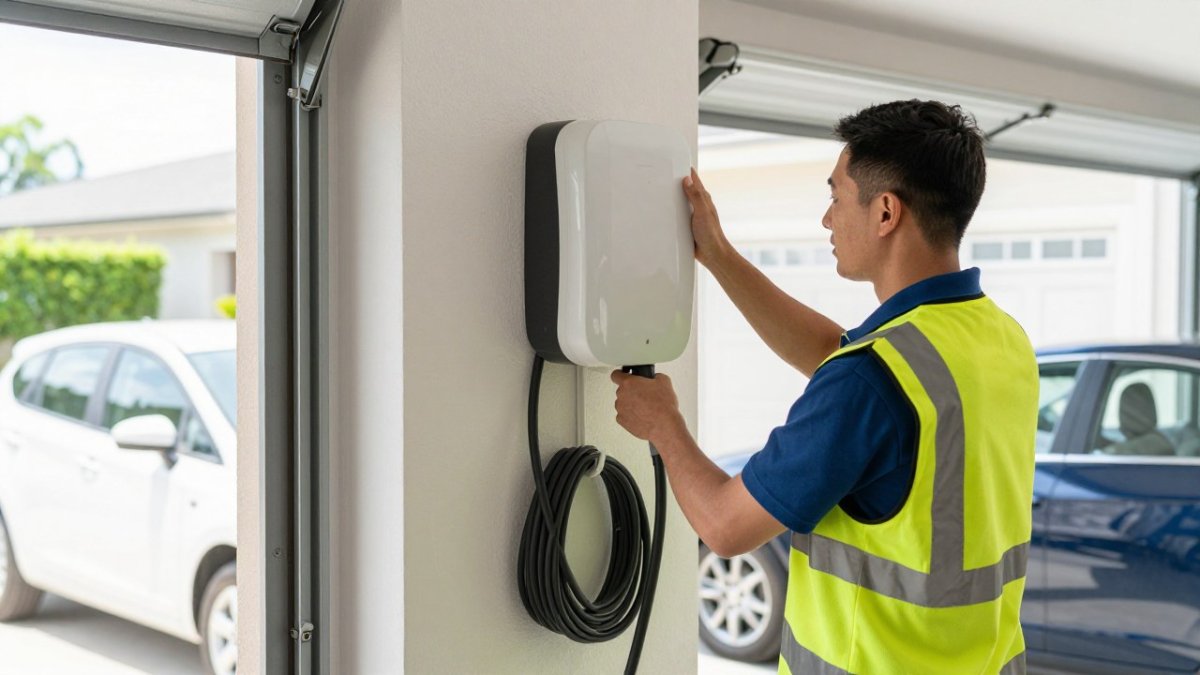
A compliant installation is more than mounting a box. Expect the electrician to confirm supply capacity, install the dedicated circuit and protection, configure load management, test the residual current protection, and issue a certificate of electrical compliance. If the unit is mounted outside, confirm the enclosure rating and cable entry are suitable for weather exposure. Ask for the load-management settings in writing so you know what the charger will do when the oven and air conditioning run together.
Warranty, Software Support and Long-Term Ownership Costs
Warranty and software support are the features buyers forget to compare, and they matter most in year four. A charger is a computer as much as an electrical fitting: it needs firmware updates, app support and a manufacturer still standing behind the product.
Ask three questions before buying:
- How long is the warranty, and what does it cover?
- Who handles software updates and app support?
- Is the unit repairable, or does a fault mean replacement?
For current installation pricing to weigh against long-term ownership, see our 2026 EV charger installation cost guide. Pricing depends on cable runs, switchboard work and the unit chosen, so a site assessment gives you a real figure rather than a guess.
Book a Licensed EV Charger Installation Assessment
Getting the features right is easy on paper. Getting them wired safely into your switchboard is the part that needs a licensed electrician. Auscore Integrated Services installs home and commercial EV chargers, with upfront quotes and a workmanship guarantee.
Our team is fully licensed and insured (Electrical Contractor Number EC16983). One customer, Michael Scott, had an EV charger installation and switchboard upgrade completed and said he "couldn't be happier with the service."
If you are ready to move, book a licensed EV charger installation assessment and we will confirm what your home needs before you spend a cent on equipment.
Frequently Asked Questions
What features should I look for in a home EV charger?
Prioritise power output that matches your daily driving distance, a certified safety enclosure with overcurrent and earth leakage protection, and a weather-resistant rating if the unit sits outdoors. Smart EV charger features such as scheduled charging, Wi-Fi connectivity and load management help you use off-peak electricity rates and avoid overloading your switchboard. Cable length, mounting location and whether the unit is tethered or untethered matter just as much for day-to-day ease of use.
Is a 7 kW home EV charger enough for everyday charging?
For most households, yes. A 7 kW home EV charger can cover a typical daily commute within a few hours of overnight charging, depending on your vehicle and driving. If you drive long distances daily or own a vehicle with a large battery and a high onboard charger limit, a higher-output unit may suit better. Your electrician can confirm what your switchboard and circuit can safely support before you commit.
Do I need a tethered or untethered home EV charger?
A tethered unit has the cable permanently attached, so you never have to dig one out of the boot. An untethered unit uses your own cable, which keeps the wall box smaller and lets you swap cables if you change vehicles. If two different EVs share the charger, untethered is often more practical. If one car uses it daily and you want the simplest possible routine, tethered wins on convenience.
Can a home EV charger adjust charging to use solar power?
Many smart chargers can. Solar EV charging works by monitoring your inverter or a CT clamp and diverting surplus generation into the car instead of exporting it. Some units also integrate with home battery systems to prioritise stored energy. The result is lower charging costs and better use of your solar investment, but it depends on the charger's software and how your system is wired, so confirm compatibility with your installer.