 comparison
Is It Worth Installing a Level 2 EV Charger at Home
Last Updated: October 30, 2026
Quick Summary
Installing a level 2 ev charger at home is worth it for most daily drivers, because it charges several times faster than a standard outlet and lets you schedule charging during off-peak time-of-use rates. The upfront cost and electrical work only pay back if you drive enough and shift charging away from public fast chargers.
- A Level 1 charger plugs into a standard 120-volt outlet and needs no installation.
- A common home Level 2 unit runs at 7 kW, but your vehicle's onboard charger caps what it accepts.
- Load management or a lower-amperage charger can sometimes avoid a full switchboard upgrade.
- In the worked example, shifting 1,620 kWh to off-peak home charging saves about $567 a year.
- Driving under about 10,000 km a year with mostly home charging rarely justifies the install on fuel savings alone.
Table of Contents
- Level 1 vs Level 2 EV Charger: What Actually Changes
- Level 2 EV Charger Charging Speed in Real Conditions
- Home EV Charger Installation Cost and What Drives It
- EV Charger Installation Requirements Before You Commit
- The Break-Even Test: When a Level 2 Charger Pays You Back
- Rentals, Strata and Apartments: Charging Without a Driveway
- Book a Licensed EV Charger Assessment
- Frequently Asked Questions
Level 1 vs Level 2 EV Charger: What Actually Changes
Whether it is worth installing a level 2 EV charger at home comes down to a simple trade-off: more upfront cost and electrical work, in exchange for charging that fits real life.
A Level 1 charger is the cable that plugs into a standard 120-volt wall outlet. It is slow but needs no installation.
The comparison below covers what changes in practice:
| Feature | Level 1 charger | Level 2 charger |
|---|---|---|
| Power source | Standard wall outlet | Dedicated 240-volt circuit |
| Installation required | None | Licensed electrician, hardwired or plug-in |
| Charging speed | Slow, overnight-plus | Several times faster |
| Best for | Low daily driving distance | Most daily drivers |
| Upfront cost | Minimal | Equipment plus installation |
For a plug-in hybrid with a small battery, Level 1 often does the job. For a battery-electric vehicle doing a normal commute, Level 2 is where home charging convenience becomes real.
Level 2 EV Charger Charging Speed in Real Conditions
The real-world level 2 EV charger charging speed depends on three things: the charger's power output, your vehicle's onboard charger limit, and the circuit it is connected to. A common home unit runs at 7 kW, which adds useful range every hour it is plugged in. But the car itself caps how much it can accept.
Here is what most guides miss: the charger is rarely the bottleneck. If your vehicle's onboard charger tops out lower than the wall unit's output, you pay for capacity you cannot use. Match the two before you buy.
Charging time also shifts with conditions. Cold batteries accept charge more slowly, and charging slows as the battery fills. Overnight charging suits most households because the car sits idle for hours anyway. Set a charging schedule so the bulk of charging happens during off-peak time-of-use rates, and the running cost falls further.
Home EV Charger Installation Cost and What Drives It
There is no single figure for home EV charger installation cost, because the price depends on your switchboard, the cable run, and whether the unit is hardwired or plug-in. Pricing depends on the site and the electrical setup, so contact Auscore Integrated Services directly for a quote on your own installation.
The cost stack, component by component
- Cable run distance: a charger on the far side of the house needs more cable and labour. A short run from the switchboard is the cheapest case; a long run through walls or underground is the most expensive.
- Switchboard capacity: an older board may need an upgrade before it can carry a dedicated circuit. This is the line item that most often turns a modest quote into a large one.
- Circuit protection: a dedicated circuit breaker and safety devices for the new circuit, including residual current protection appropriate to EV charging.
- Permits and compliance: work must meet local wiring rules and be signed off. Compliance is not optional and should never be the line a quote trims.
A hardwired installation usually costs more in labour than a plug-in charger on an existing outlet, but it is tidier, often more robust, and avoids relying on a domestic outlet for a continuous high load.
The upgrade you may not need: load management and lower amperage
The most common assumption is that a Level 2 charger requires a switchboard upgrade. Often it does not. Load management lets the charger monitor the home's total demand and throttle back when the oven, air-conditioning, or dryer are running, so the charger shares available capacity instead of demanding a fixed maximum. That can avoid a full board upgrade entirely in some homes.
A second alternative is a lower-amperage charger. A unit set to a lower current still charges far faster than a standard outlet and may fit within existing capacity without any board work. The trade-off is slower charging, but for overnight top-ups it is often irrelevant.
How to read a quote
A good quote separates equipment, labour, cable, circuit protection, and any switchboard work, and states whether load management is included. A single lump sum with no breakdown is hard to compare. Ask specifically whether the quote assumes a board upgrade, and whether load management was considered as an alternative.
EV Charger Installation Requirements Before You Commit
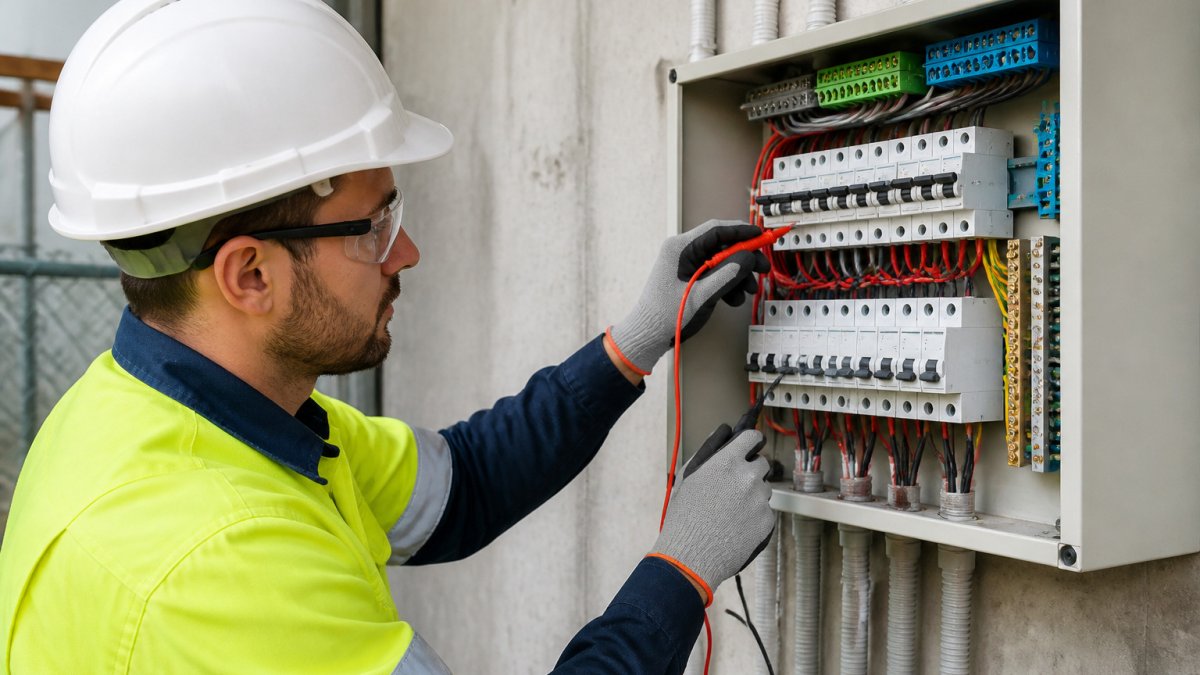
Before any charger goes on the wall, the electrical supply has to be able to carry it safely. That is the step most homeowners underestimate, and it is where a licensed electrician earns their fee.
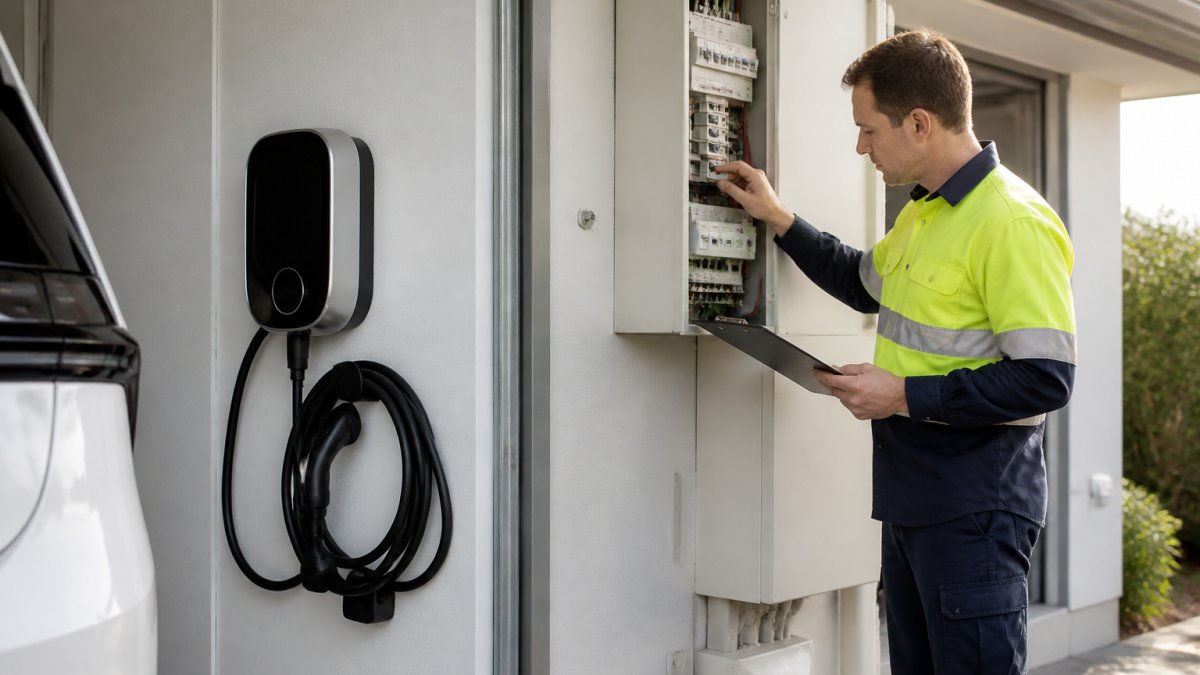
The core EV charger installation requirements are straightforward: a dedicated circuit, correct cable sizing, proper circuit protection, and compliance with the relevant wiring rules and standards. Our residential electrical team handles switchboard upgrades and new circuits as part of the same job, so the charger and the supply are sorted together.
Switchboard Capacity, Dedicated Circuits and Load Management
An older switchboard may have no spare capacity for a new circuit. The fix is either a switchboard upgrade or load management, which lets the charger share available power with the rest of the home instead of drawing a fixed maximum. Load management is often the cheaper path when a full upgrade is not needed, and it keeps the total demand within safe limits.
Watch out: skipping the capacity check to save on labour can leave you with a charger that trips the supply or, worse, an unsafe circuit. Get the assessment done first.
The Break-Even Test: When a Level 2 Charger Pays You Back
A Level 2 charger does not pay for itself in a neat, universal number. The payback period depends on how much you drive, what you pay for electricity, and how often you would otherwise use public charging, which usually costs more per unit of energy. Most guides stop at that sentence. This one gives you the actual arithmetic so you can run your own numbers.
The formula, in plain terms
Annual saving = (public charging cost per kWh − off-peak home charging cost per kWh) × kWh you shift from public to home charging each year.
Payback period (years) = installed cost ÷ annual saving.
That is the whole model. The hard part is filling in honest inputs, not the maths.
A worked example you can adapt
Assume a driver covers 15,000 km a year in a vehicle that uses 18 kWh per 100 km. That is 2,700 kWh of charging a year. Suppose 60% of that currently happens at public fast chargers and 40% at home on a standard outlet. If public charging costs roughly 60c per kWh and off-peak home charging costs roughly 25c per kWh, shifting that 60% (1,620 kWh) to off-peak home charging saves about $567 a year. Against an installed cost of, say, $2,500, the simple payback is roughly four and a half years.
The inputs that actually move the answer
- Annual distance: the single biggest lever. Doubling distance roughly doubles the saving.
- Share of charging currently done in public: if you already charge mostly at home on a standard outlet, the fuel saving from Level 2 is small; the case rests on speed and convenience.
- Off-peak versus peak spread: a wide time-of-use spread makes scheduled Level 2 charging much cheaper per kWh than ad-hoc public charging.
- Installed cost: equipment, labour, and any switchboard work. A load-management solution instead of a full board upgrade can cut this materially.
- Public charging price: prices vary by network and by whether you pay a session fee, an idle fee, or a per-kWh rate. Use the rate you actually pay.
When the numbers say no
If you drive under about 10,000 km a year, charge mostly at home already, and have a standard outlet near where you park, the fuel saving alone rarely justifies the install. In that case the honest answer is that a Level 2 charger is a convenience and property upgrade, not a payback play, and you should decide on those grounds.
This is the personalised break-even decision most guides skip, and it matters more than any generic recommendation. Run your own three numbers, distance, off-peak rate, public rate, before you book an install.
Rentals, Strata and Apartments: Charging Without a Driveway
Charging gets harder without a private driveway, but it is not impossible.
Practical options include a dedicated charger on your allocated bay, a shared unit with usage metering, or a plug-in setup where a suitable outlet exists. Each has trade-offs in cost and complexity. Get the electrical assessment and the approval sorted before committing, and document the agreement so future residents are not left guessing.
Book a Licensed EV Charger Assessment
The honest answer to whether a Level 2 charger is worth it is: it depends on your car, your commute, and your switchboard. A short assessment settles all three. If you are weighing up contractors, our guide on how to choose an electrical contractor covers the questions worth asking.
At Auscore Integrated Services, we are fully licensed and insured (Electrical Contractor Number EC16983), and we install EV chargers for residential and commercial clients in Perth.
Ready to find out if a Level 2 charger suits your home? Book Now with our Perth team.
Frequently Asked Questions
How much does a level 2 EV charger charge per hour?
A level 2 EV charger typically adds roughly 30 to 60 kilometres of driving range per hour of charging, depending on the vehicle's onboard charger and the unit's power rating. A 7 kW unit adds more range per hour than a 3.6 kW unit, and some vehicles cap the rate they can accept. That is why overnight charging usually covers a full day of driving for most households, even when the battery is only partly depleted.
Is a Level 2 charger worth it if I only drive short distances?
Short daily trips often suit a Level 1 charger plugged into a standard 120-volt outlet, since overnight hours are usually enough to top up. A Level 2 EV charger becomes worthwhile when your daily driving distance grows, when you need a faster turnaround between trips, or when you want a dedicated circuit with load management. Weigh the home EV charger installation cost against how often you would actually use the faster rate.
What are the typical EV charger installation requirements?
Most installations need a dedicated circuit, adequate switchboard capacity, compliant wiring and a licensed electrician to certify the work. A level 2 unit usually runs on a 240-volt supply and may be hardwired or plug-in depending on the model. Before quoting, an electrician will check panel capacity, earthing and cable routes. Some properties also need a permit or strata approval, so confirm those requirements early.
Can I install a Level 2 EV charger in an apartment?
Apartment charging is possible but depends on access to a dedicated parking space, switchboard capacity and strata approval. Shared parking often requires load management so the building's supply is not overloaded, and metering arrangements need to be clear. Speak with your strata manager about the process before committing, and have a licensed electrician assess the electrical capacity of the shared infrastructure.
Charging at home should be simple, safe, and sized to how you actually drive. Auscore Integrated Services supplies and installs smart EV chargers, handles switchboard upgrades and dedicated circuits, and gives you a clear upfront quote before any work starts. Get started with Auscore Integrated Services and charge at home with confidence.