 ultimate-guide
Smart Home EV Charger Setup Guide
Table of Contents
- Understanding Smart Home EV Charger Setup
- Assessing Your Home's Electrical Capacity
- Choosing Between Level 1 and Level 2 Chargers
- EV Charger RCD Requirements and Safety Standards
- Home EV Charger Solar Integration
- EV Charger Installation Cost Australia
- Installation Process and Smart Connectivity Setup
- Conclusion
- Frequently Asked Questions
Last Updated: September 27, 2026
Understanding Smart Home EV Charger Setup
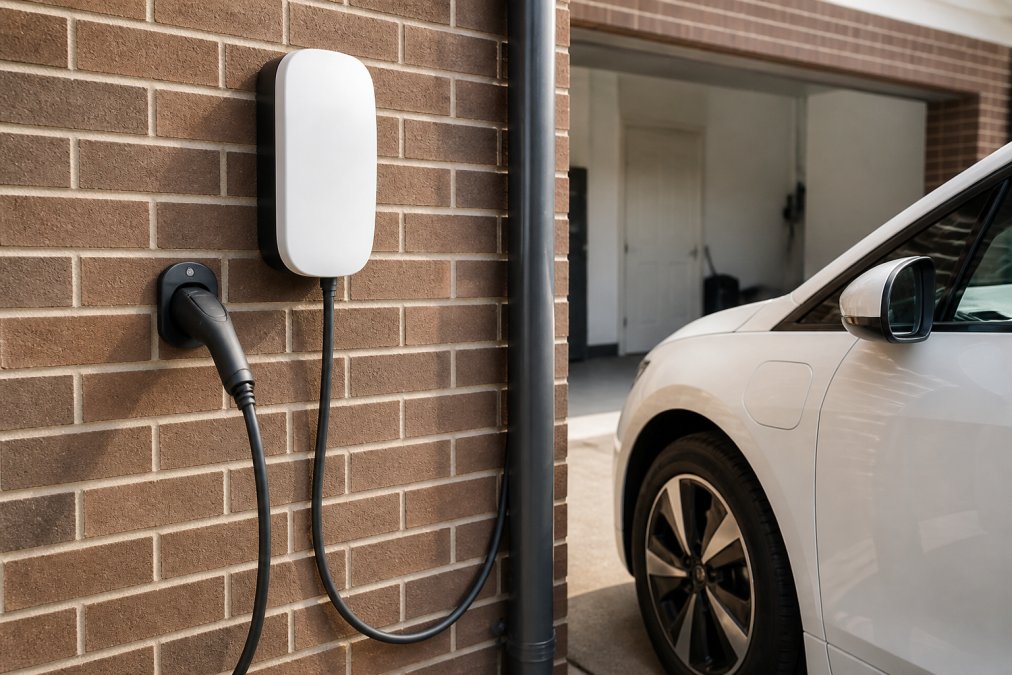
A smart home EV charger setup is an intelligent charging station that connects to your home's electrical system and communicates with mobile apps and home automation networks to optimise charging schedules and energy management. Smart chargers monitor grid demand, track consumption, and allow remote control via Wi-Fi or cellular connectivity.
Smart chargers learn when electricity is cheapest, adjust speed based on household demand, and integrate with solar systems to maximise renewable energy usage. Homeowners regularly reduce charging costs by timing sessions during off-peak hours or pairing installations with existing solar arrays.
The setup involves assessing electrical capacity, understanding safety standards, choosing the right charger type, and ensuring professional installation. Below, we'll walk through each decision point so you understand what's involved before installation day.
Assessing Your Home's Electrical Capacity
Before ordering a charger, determine whether your electrical panel can handle the additional load. Most smart EV chargers draw between 7 and 11 kilowatts during operation. Your home's main switchboard has a maximum capacity, typically 60 to 100 amperes, shared among all appliances, heating, cooling, and the new charger.
Check your switchboard's main circuit breaker amperage rating and identify existing high-load appliances (air-conditioning, electric hot water, large appliances). If your panel runs at 80% capacity during peak usage, adding a Level 2 charger could trigger breaker trips or require a panel upgrade.
A licensed electrician can assess this in minutes, measuring existing load and recommending whether you need a panel upgrade, dedicated circuit, or load management hardware. Load management systems reduce charger output when other high-demand appliances run, preventing overload without expensive infrastructure work.
Choosing Between Level 1 and Level 2 Chargers
Level 1 chargers use a standard 10-amp household outlet and deliver roughly 2 kilowatts of power, adding about 8 kilometres of range per hour. For someone who drives 20 kilometres daily and charges overnight, Level 1 fully charges most EVs in 12 to 24 hours. Installation requires no electrician.
Level 2 chargers require dedicated 32-amp or 40-amp circuits and deliver 7 to 11 kilowatts, adding 30 to 50 kilometres of range per hour. Most homeowners choose Level 2 because it cuts charging time dramatically, a depleted battery reaches 80% charge in 4 to 8 hours instead of overnight.
Level 1 chargers cost less than $1,000 but take significantly longer. Level 2 chargers require a dedicated circuit, potential switchboard work, and professional installation, but are the standard for home EV charging in Australia and the practical choice for regular use.
Smart features are standard on modern Level 2 units: Wi-Fi connectivity, mobile app control, and home automation integration. You can schedule charging to start when solar is generating or delay it until off-peak rates begin.
EV Charger RCD Requirements and Safety Standards
Australian electrical safety standards require Residual Current Device (RCD) protection on all EV charger installations. An RCD detects ground faults where electricity leaks to earth and cuts power within milliseconds, preventing electrocution and fire risk.
The relevant standard is AS/NZS 3000, the Australian and New Zealand standard for electrical installations. This standard mandates Type A RCDs (sensitive to both AC and DC faults) for EV charger circuits. Older Type AC RCDs won't suffice because EV chargers produce DC ripple current that Type AC devices can't detect.
Beyond RCDs, your installation must comply with Australian Standard AS/NZS 61851-1 for electric vehicle conductive charging systems. This covers cable safety, connector types, voltage, and grounding. A licensed electrician ensures compliance automatically, it's part of their professional obligation. If you're hiring someone to install a charger, verify they hold current electrical contractor registration with the relevant state authority.
Ground fault protection is non-negotiable. Modern smart chargers include built-in ground fault detection, but the RCD on your circuit is the final safety layer.
Home EV Charger Solar Integration
Pairing your smart charger with a solar system transforms charging economics, but requires understanding how your inverter communicates with the charger and responds to generation fluctuations.
How Solar-Charger Integration Works
Solar panels generate peak output during midday; most people drive in the morning and evening.
Real-World Load Balancing Scenarios
Avoiding Over-Specification
Battery Storage and Time-Shifting
EV Charger Installation Cost Australia
Installation costs vary based on charger type, electrical work required, and site conditions. A Level 1 charger requires no installation cost beyond the unit itself. A Level 2 charger requires a dedicated circuit, running cable from your switchboard to the charger location.
| Charger Type | Installation Scope | Typical Considerations |
|---|---|---|
| Level 1 | Plug-and-play | No electrician needed; slower charging |
| Level 2 | Dedicated circuit + RCD | Requires switchboard assessment; faster charging |
| Level 2 + Solar Integration | Dedicated circuit + inverter signalling | Highest upfront cost; lowest long-term charging cost |
Installation Process and Smart Connectivity Setup
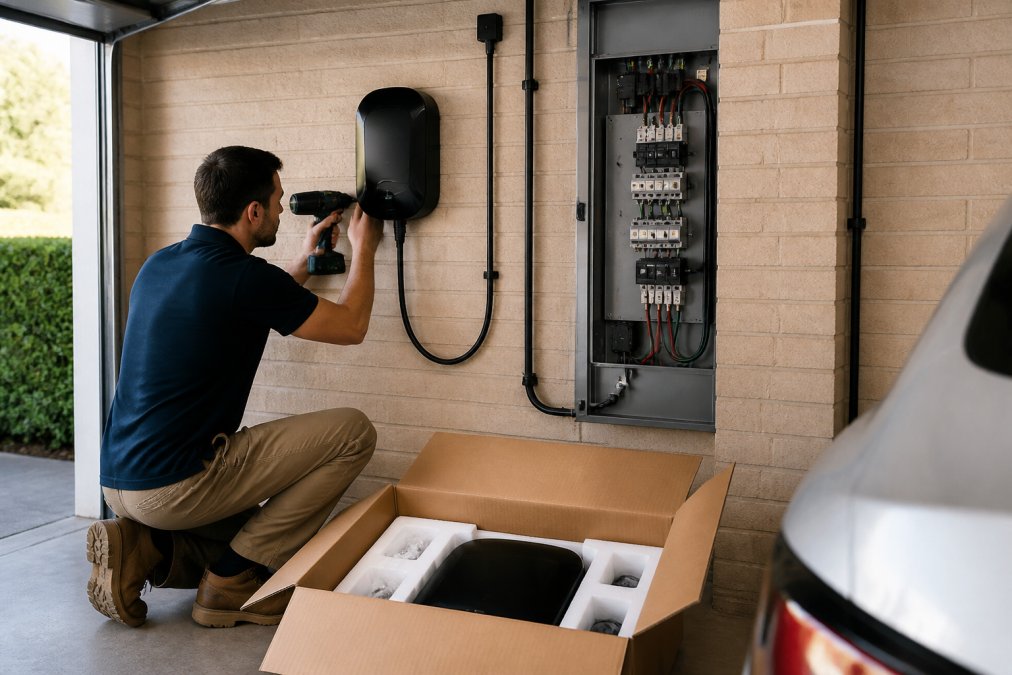
Installation follows a standard process, but smart connectivity setup and security configuration deserve careful attention.
The Electrical Installation Phase
Smart Connectivity: Network Setup and Access Control
-
Create a dedicated Wi-Fi network for IoT devices, If your charger supports it, connect it to a separate 2.4 GHz Wi-Fi network isolated from your primary home network. This prevents a compromised charger from accessing your computers, phones, or personal files. Many modern routers support "guest networks" or "IoT networks" for this purpose.
-
Use a strong, unique password, The charger's Wi-Fi password should be different from your main home Wi-Fi password. If the charger is compromised, attackers won't automatically gain access to your primary network.
-
Create a manufacturer account with a strong password, You'll create an account with the charger manufacturer (e.g., Wallbox, Tesla, Zappi, etc.) to access the mobile app. Use a password manager to generate a unique, complex password. Never reuse passwords across different accounts.
-
Enable two-factor authentication (2FA), If the charger manufacturer's app supports 2FA, enable it. This adds a second verification step when logging in from a new device, preventing unauthorised access even if your password is compromised.
Firmware Updates and Security Patches
Configuring Charging Preferences and Automation
Solar Integration Configuration
Post-Installation Security Checklist
Before considering the installation complete, verify:
- Charger is connected to a dedicated or guest Wi-Fi network, not your primary home network.
- Manufacturer account password is unique and stored in a password manager.
- Two-factor authentication is enabled on the manufacturer's app.
- Firmware is up to date (check the app or manufacturer website).
- Automatic firmware updates are enabled in charger settings.
- Charging schedule and preferences are configured.
- Solar integration (if applicable) has been tested and documented.
- Certificate of Electrical Safety has been received and filed.
Conclusion
A smart home EV charger setup transforms how you fuel your vehicle, but it requires careful planning around electrical capacity, charger type, and safety compliance. The process isn't complex, but it's not a DIY project, professional installation ensures your home's safety and the charger's reliability.
Frequently Asked Questions
Do I need a licensed electrician to install my smart EV charger?
Yes. Installing a smart home EV charger requires a licensed electrician in Australia to ensure compliance with electrical safety standards and building codes. The work involves hardwired installation to your electrical panel, which carries significant safety risks if not done correctly. A qualified electrician will assess your home's capacity, install appropriate circuit protection, and ensure ground fault protection is in place. This protects both your property and your vehicle.
What are the EV charger RCD requirements for a safe installation?
Your smart EV charger installation must include residual current device (RCD) protection, typically a Type A RCD or RCBO (residual current circuit breaker with overcurrent protection). This protects against electrical faults and ground leakage. Australian safety standards require this protection on all EV charging circuits. Your electrician will determine whether you need a dedicated RCD or if your existing switchboard protection is suitable. Never attempt to bypass or omit this requirement.
Can I use solar power to charge my EV at home?
Yes, home EV charger solar integration is possible and increasingly popular. A solar system can power your charger during daylight hours, reducing grid dependence and energy costs. However, you'll need sufficient solar capacity (typically 5-10 kW depending on your EV and usage), battery storage to enable off-peak charging, and smart load management to coordinate charging with solar generation. Your electrician can assess whether your existing solar system has capacity or if upgrades are needed.
What electrical requirements must my home meet for a smart EV charger?
Your home needs adequate electrical panel capacity (typically 40-60 amperes available), proper circuit breaker sizing (usually 32 amperes for Level 2), correct voltage supply (single or three-phase), and sufficient cable gauge for the distance from panel to charger location. A licensed electrician will assess your electrical infrastructure and may recommend a switchboard upgrade if capacity is insufficient. Smart chargers also require Wi-Fi connectivity for remote monitoring and dynamic load balancing features.
What is the difference between a standard and a smart EV charger?
A standard charger provides basic charging without connectivity features. A smart EV charger includes Wi-Fi or mobile application integration, allowing remote monitoring, scheduled charging during off-peak hours, and dynamic load management. Smart chargers can communicate with your home energy management system, optimise charging based on grid demand, and provide detailed charging insights. They cost more upfront but offer energy savings and greater control over your charging schedule.
How does a smart EV charger integrate with home energy management systems?
Smart EV chargers connect via Wi-Fi to your home network and communicate with energy management software. This integration enables load balancing, preventing your charger from drawing excessive power when other appliances are running. You can schedule charging during off-peak hours when electricity is cheaper, monitor consumption through a mobile application, and receive firmware updates for security and efficiency improvements. Some systems also integrate with solar systems for optimised renewable energy use.
Are there specific safety standards for EV charger installations in Australia?
Yes. EV charger installations must comply with Australian electrical standards, including AS/NZS 3000 (electrical safety), AS/NZS 61851-1 (EV charging safety), and local building codes. Your installation requires ground fault protection, proper cable management, circuit breaker sizing, and RCD or RCBO protection. A licensed electrician will ensure your installation meets all regulatory requirements and passes safety inspection before the charger becomes operational.