 blog
7 Energy-Efficient Lighting Solutions for Retail Shops
Table of Contents
- Why Energy-Efficient Lighting Matters for Retail Shops
- Retail Shop Lighting Ideas: Seven Solutions Compared
- 1. LED Panel Lights for Ambient Lighting
- 2. LED Track Lighting for Retail Display Areas
- 3. LED Spotlights for Merchandise Highlighting
- 4. LED Strip Lights for Shelving and Accent
- 5. LED Downlights for Recessed Ceiling Installation
- 6. Smart Dimmer Switches and Occupancy Sensors
- 7. Retrofit Kits for Existing Fluorescent Fixtures
- Commercial LED Lighting: Energy Consumption and Cost Savings
- Shop Lighting Energy Savings: Calculating Payback and ROI
- Lighting Metrics and Selection Criteria for Retail Environments
- Retail Lighting Layout and Zoning Best Practices
- Controls, Commissioning, and Ongoing Optimisation
- Frequently Asked Questions
Last Updated: October 21, 2026
Why Energy-Efficient Lighting Matters for Retail Shops
Energy-efficient lighting retail solutions are no longer optional for shop owners looking to cut operating costs and improve customer experience.
Your shop's lighting typically accounts for a significant share of electricity consumption. Upgrading from incandescent or fluorescent fixtures to LEDs reduces wattage while improving merchandise displays, customer perception, and energy bills at once.
At Auscore Integrated Services, we design and install energy-efficient lighting systems for Perth retail shop owners, balancing cost savings with visual appeal. The seven solutions below suit environments from small boutiques to larger commercial spaces.
Retail Shop Lighting Ideas: Seven Solutions Compared
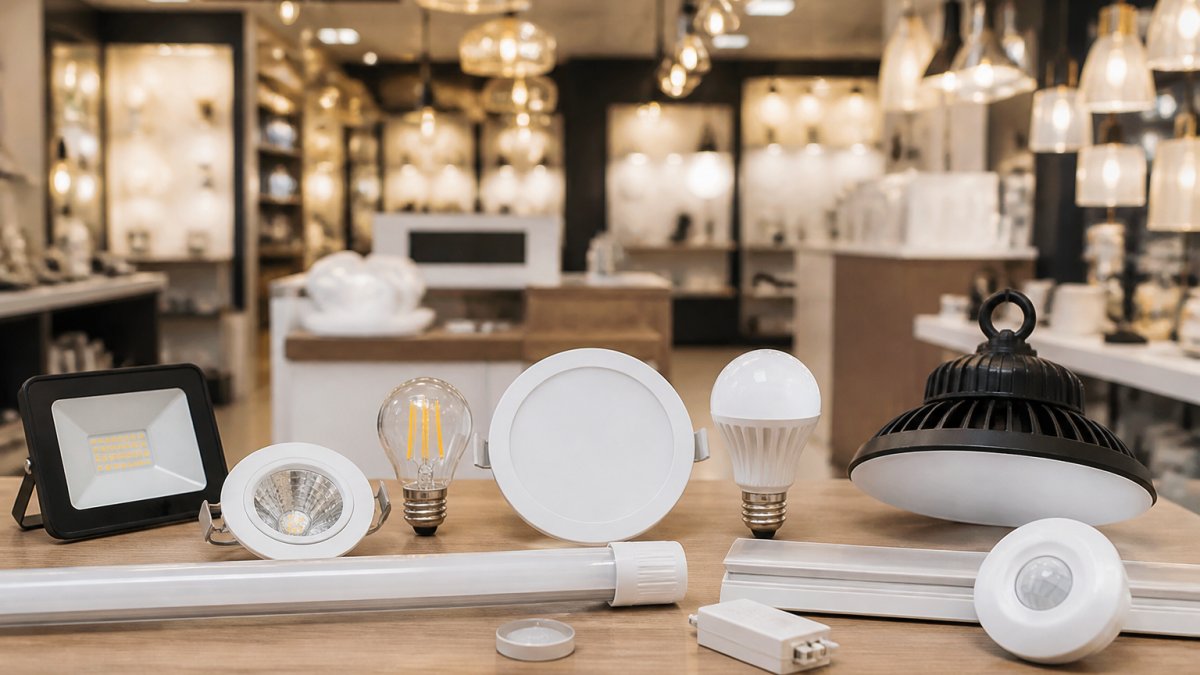
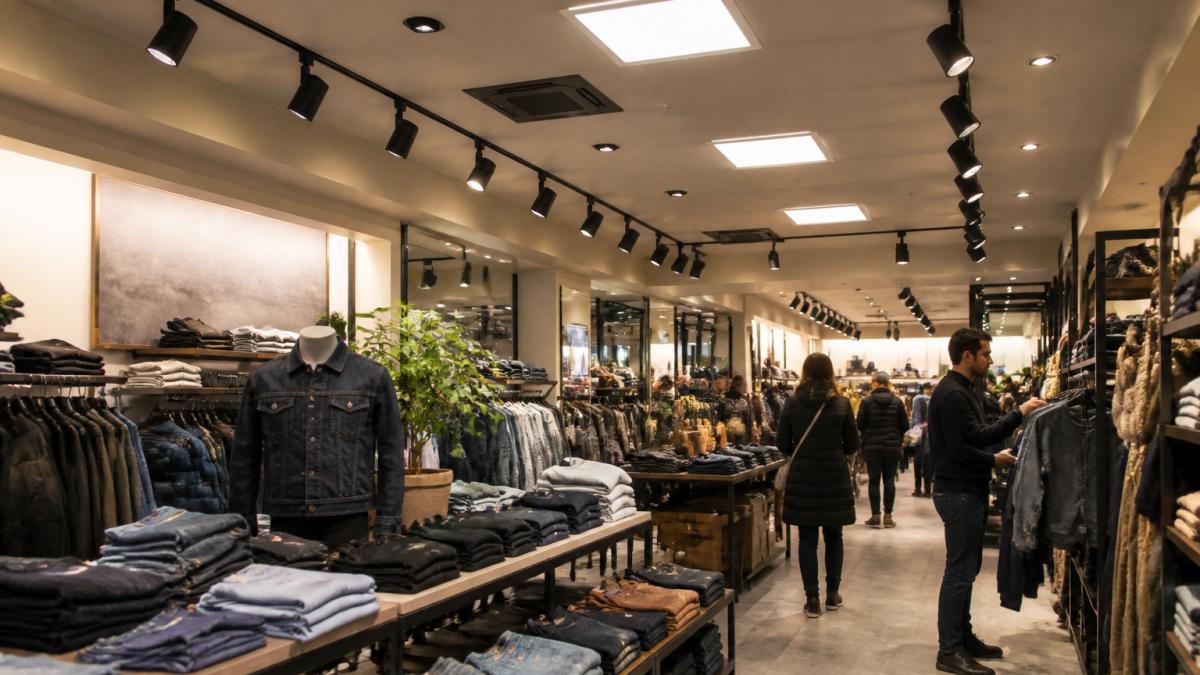
The most effective retail lighting strategies combine fixture types to reduce energy consumption, highlight merchandise, and create an inviting atmosphere. These seven solutions address different areas of a typical shop.
| Solution | Best For | Key Advantage | Brightness Range |
|---|---|---|---|
| LED Panel Lights | General ambient lighting | Even, flicker-free illumination | 3,000-5,000 lumens |
| LED Track Lighting | Display areas and feature walls | Directional, adjustable | 2,000-4,000 lumens per fixture |
| LED Spotlights | Merchandise highlighting | Focused accent lighting | 500-1,500 lumens |
| LED Strip Lights | Shelving and accent | Flexible, discreet installation | 300-1,000 lumens per metre |
| LED Downlights | Recessed ceiling installation | Clean, professional appearance | 1,500-3,000 lumens |
| Smart Dimmer Switches | All fixture types | Flexible intensity control | Varies by fixture |
| Retrofit Kits | Existing fluorescent fixtures | Cost-effective upgrade path | Matches original output |
1. LED Panel Lights for Ambient Lighting
LED panel lights provide consistent, flicker-free illumination across the shop floor, forming the backbone of ambient lighting that lets customers move safely and browse comfortably.
They suit drop ceilings or suspended installations where you want uniform light without visible fixtures. Unlike fluorescent panels, LEDs generate minimal heat and last far longer, reducing maintenance disruption. Various colour temperatures let you match your brand: cooler tones for tech or modern retail, warmer for fashion or hospitality.
Installation is straightforward: most panels drop into existing ceiling grids or mount flush to the surface. Energy consumption is far lower than fluorescent equivalents, and many models include dimming.
2. LED Track Lighting for Retail Display Areas
Track lighting gives you directional control, making it essential for feature walls, window displays, and merchandise areas you want to emphasise. Each fixture adjusts independently to highlight different products or create focal points.
That flexibility matters because displays change seasonally or by promotion: instead of rewiring permanent fixtures, you adjust angles and brightness instantly. LED track fixtures use roughly 70% less energy than halogen equivalents while producing brighter, more focused light.
Track placement works best on ceilings with clear sight lines to display areas, and installation requires qualified electrical work for safe connections and load distribution.
3. LED Spotlights for Merchandise Highlighting
Spotlights create dramatic accent lighting that draws attention to specific products. A well-placed spotlight makes jewellery, cosmetics, or artwork appear more valuable through depth and shadow contrast.
LED spotlights come as standalone fixtures or part of track systems, and are particularly effective in boutique retail where individual product presentation matters. The narrow beam concentrates light precisely where you want it, avoiding wasted illumination.
Choose spotlights with adjustable colour temperature if you work with products where colour accuracy matters, clothing, cosmetics, or artwork all benefit from the right light quality.
4. LED Strip Lights for Shelving and Accent
Strip lights mounted under shelves or along product edges create visual interest while providing task lighting for customers examining items. They're popular in cosmetics, jewellery, and specialty retail, where product visibility influences purchase decisions.
Installation is simple: most strip lights self-adhere and need only a power connection. They consume minimal energy and generate almost no heat, making them safe in confined spaces. Colour-changing options match seasonal themes or brand identity.
The main advantage is flexibility: you can add strip lighting to existing shelving without major renovation, an affordable upgrade that improves visual appeal without structural changes.
5. LED Downlights for Recessed Ceiling Installation
Downlights installed in recessed ceiling cavities create a clean, professional look while providing focused downward light. They're ideal for suspended ceilings or where you want fixtures hidden.
Modern LED downlights come in various beam angles and colour temperatures: narrower beams for accent lighting or merchandise zones, wider beams for general illumination. They generate minimal heat compared to halogen, reducing air-conditioning load in summer.
Installation requires ceiling access and qualified electrical work. Once installed, downlights are virtually maintenance-free thanks to long LED lifespan, reducing disruptive bulb replacements.
6. Smart Dimmer Switches and Occupancy Sensors
Smart controls turn any lighting system into an energy-saving tool. Dimmers let staff adjust brightness by time of day, natural light, and traffic patterns, while occupancy sensors automatically reduce lighting in low-traffic areas or after hours.
Savings from smart controls often exceed those from LED upgrades alone. Dimming by 30% during quiet periods cuts consumption significantly without affecting peak-hour experience, and occupancy sensors stop lights being left on in stockrooms or back areas.
Integration with building management systems allows automated scheduling and remote monitoring, and many systems include smartphone apps for control from anywhere.
7. Retrofit Kits for Existing Fluorescent Fixtures
If your shop still uses fluorescent lighting, retrofit kits offer a cost-effective upgrade without replacing entire fixtures, swapping the ballast and tubes for LED equivalents that fit existing housings.
Retrofit kits are particularly valuable in older buildings where removing ceiling fixtures would be disruptive or expensive. They deliver immediate savings, typically 40-60% less electricity for that fixture type, while maintaining the same light output and beam pattern.
Installation is straightforward for qualified electricians and cheaper than replacing entire fixtures. Retrofit kits also reduce maintenance frequency since LED tubes last far longer than fluorescent ones.
Commercial LED Lighting: Energy Consumption and Cost Savings
The shift from incandescent, halogen, and fluorescent lighting to LED fundamentally changes how retail shops consume electricity. Understanding the energy differences helps you prioritise fixtures in your upgrade.
Incandescent bulbs convert roughly 5% of energy into light, with the remainder becoming heat. A 100-watt incandescent bulb produces about 1,600 lumens. An LED delivering the same brightness uses approximately 15 watts, an 85% reduction in energy consumption.
For a typical retail shop with 50 fixtures operating 10 hours daily, switching from fluorescent to LED lighting reduces annual electricity consumption by thousands of kilowatt-hours. This reduction appears directly on your electricity bills and compounds over the multi-year lifespan of LED fixtures.
Beyond direct energy savings, LED systems generate less heat, reducing air-conditioning demand during warm months. In climates where cooling costs are significant, this secondary benefit often adds 10-15% to total savings.
Shop Lighting Energy Savings: Calculating Payback and ROI
Calculating return on investment for lighting upgrades requires understanding three factors: current energy consumption, LED system cost, and payback period.
Start by identifying your current annual electricity costs for lighting. Check your electricity bills for usage patterns and rates.
Next, estimate the cost of upgrading to LED fixtures. This includes equipment cost, installation labour, and any necessary electrical upgrades. Auscore Integrated Services provides upfront quotes for lighting projects, ensuring you know exact costs before work begins.
The payback period is typically 2-4 years for most retail lighting upgrades, meaning the energy savings will have covered the installation cost within that timeframe.
Consider also the non-financial benefits: improved product presentation, reduced maintenance interruptions, better customer experience, and lower environmental impact. Many shop owners find these benefits justify upgrades even when payback periods are longer.
Lighting Metrics and Selection Criteria for Retail Environments
Choosing the right fixtures requires understanding key lighting metrics and how they apply to retail environments. These measurements help you compare options and ensure adequate light quality for your specific shop type.
Brightness and Light Output: Understanding Lumens and Wattage
Lumens measure the total amount of visible light a fixture produces. This is different from wattage, which measures energy consumption. A fixture producing 3,000 lumens might use 30 watts (LED) or 100 watts (incandescent), same brightness, vastly different energy cost.
For retail applications, lumens requirements depend on the area's purpose. General shop floor areas typically need 300-500 lumens per square metre for comfortable browsing. Display and accent areas benefit from 500-1,000 lumens per square metre to make merchandise stand out. Back-of-house areas like stockrooms need only 200-300 lumens per square metre.
Wattage is relevant only for understanding energy consumption and cost. When comparing fixtures, ignore wattage and focus on lumens, two fixtures with identical lumen output will appear equally bright regardless of wattage difference.
Colour Temperature and Light Quality for Product Display
Colour temperature, measured in Kelvin (K), describes whether light appears warm or cool. Lower values (2,700-3,000K) produce warm, yellowish light that flatters skin tones and creates intimate atmospheres. Higher values (4,000-5,000K) produce cool, bluish light that enhances clarity and works well for technical or modern retail.
Colour Rendering Index (CRI) measures how accurately a light source reveals object colours. A CRI of 90 or higher is essential for retail where colour accuracy influences purchase decisions, clothing, cosmetics, artwork, and jewellery all require high CRI lighting to appear as customers expect.
Most retail shops benefit from a mix of colour temperatures: warm ambient lighting (3,000K) creates inviting atmosphere, while cooler accent lighting (4,000-5,000K) on display areas enhances product visibility and detail clarity.
Retail Lighting Layout and Zoning Best Practices
Effective retail lighting combines different fixture types in distinct zones, each serving a specific purpose. This layered approach, called zoning, creates visual interest while optimising energy use and customer experience.
Entrance zones benefit from slightly brighter lighting (400-500 lumens per square metre) to create a welcoming transition from outdoor light.
Main shopping areas use moderate ambient lighting (300-400 lumens per square metre) from panel lights or downlights, supplemented by accent lighting on featured products.
Display zones use focused track lighting and spotlights (500-1,000 lumens per square metre) to create visual hierarchy and draw attention to specific items.
Back-of-house areas like fitting rooms, stockrooms, and staff areas need only functional lighting (200-300 lumens per square metre), as these aren't customer-facing spaces.
Layering these zones allows you to adjust overall shop brightness by controlling different fixture groups independently.
Controls, Commissioning, and Ongoing Optimisation
Installing energy-efficient fixtures is only the first step. Proper controls and commissioning ensure your system delivers intended energy savings and performance throughout its lifespan.
Commissioning involves testing all fixtures, verifying colour temperature consistency, checking dimming functionality, and confirming that occupancy sensors trigger appropriately.
Smart controls, dimmers, occupancy sensors, and scheduling systems, multiply energy savings by allowing dynamic adjustment based on actual shop conditions.
Regular maintenance extends fixture lifespan and maintains performance. LED fixtures require virtually no maintenance compared to older technologies, but periodic cleaning of lens covers and inspection of connections ensures continued optimal performance.
Auscore Integrated Services provides ongoing support for lighting systems we install, including maintenance recommendations, control system optimisation, and future upgrades as technology advances.
Energy-efficient lighting retail solutions transform how your shop operates and appears to customers.
Frequently Asked Questions
Which type of lighting is most energy-efficient for a retail shop?
LED lighting is the most energy-efficient option for retail shops. LED fixtures use 75-80% less energy than incandescent bulbs and 40-50% less than fluorescent alternatives, while delivering superior light output measured in lumens. LED track lighting and panel lights are particularly suited to retail because they focus light where it's needed, on merchandise and customer areas, reducing wasted energy and lowering electricity costs significantly over time.
What is the difference between colour temperature and light quality in retail lighting?
Colour temperature (measured in Kelvin) determines whether light appears warm (2700K-3000K, yellowish) or cool (5000K-6500K, bluish). Light quality refers to how accurately colours appear under that light, measured by the Colour Rendering Index (CRI). For retail, warm light (3000K-4000K) with high CRI (90+) is standard because it makes merchandise look inviting and colours appear true, encouraging customer purchases and creating a pleasant store atmosphere without excessive heat output.
Are there government rebates or incentives for LED lighting upgrades in retail shops?
Several rebate schemes and energy-efficiency programs operate in different states. Various state-based energy-efficiency programs may offer grants, rebates, or tax deductions for commercial lighting upgrades. Contact your state's energy regulator or business support agency for current incentive details and eligibility. A licensed electrical contractor can advise on available rebates specific to your location and retrofit scope.