 how-to
How to Hire a Licensed Electrician for Appliance Setup
Last Updated: October 23, 2026
Quick Summary
How to hire a licensed electrician for appliance setup starts by verifying their current licence through your state's regulatory body, checking their insurance and contractor number, and asking specific questions about the appliance type, certification, and warranty. Compare itemised quotes that include labour, materials, circuit work, and compliance certificates before making your final decision.
- Verify the electrician's licence number, insurance, and electrical contractor number before hiring.
- Ask whether your appliance is hardwired or plug-in, as this determines circuit requirements and cost.
- Request a compliance certificate in writing and confirm it is included in the quoted price.
- Compare itemised quotes that break down attendance, labour, materials, circuit work, switchboard work, and testing separately.
- Get references from similar appliance installations completed in the last six months.
Table of Contents
- When to Hire a Licensed Electrician for Appliance Setup
- How to Check an Electrician's Licence and Credentials
- Questions to Ask an Electrician Before Hiring
- Getting an Appliance Installation Quote
- Electrical Installation Safety Checklist
- What Happens During Installation and After
- Comparing Bids and Making Your Final Decision
- Frequently Asked Questions
When to Hire a Licensed Electrician for Appliance Setup
How to hire a licensed electrician for appliance setup starts with knowing when DIY won't cut it. Some appliances need professional installation. Others demand it by law.
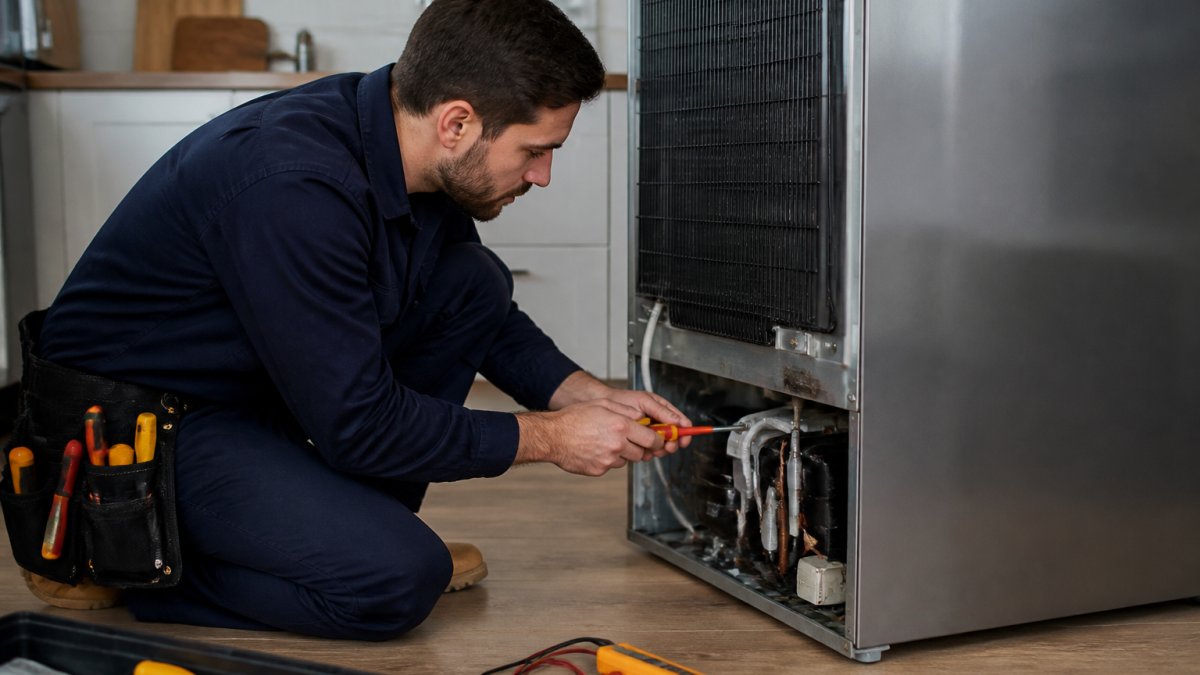
Hardwired appliances like ovens, cooktops, and air conditioning units require a licensed electrician. They draw serious load and need new circuits or dedicated powerpoints, wrong wiring creates fire hazards and voids warranties.
When renovating or building new, you cannot legally install new circuits or modify your switchboard without a qualified electrician, this protects you and future buyers.
How to Check an Electrician's Licence and Credentials
First, verify your electrician holds a current licence, this protects you from unlicensed work and dodgy installations.
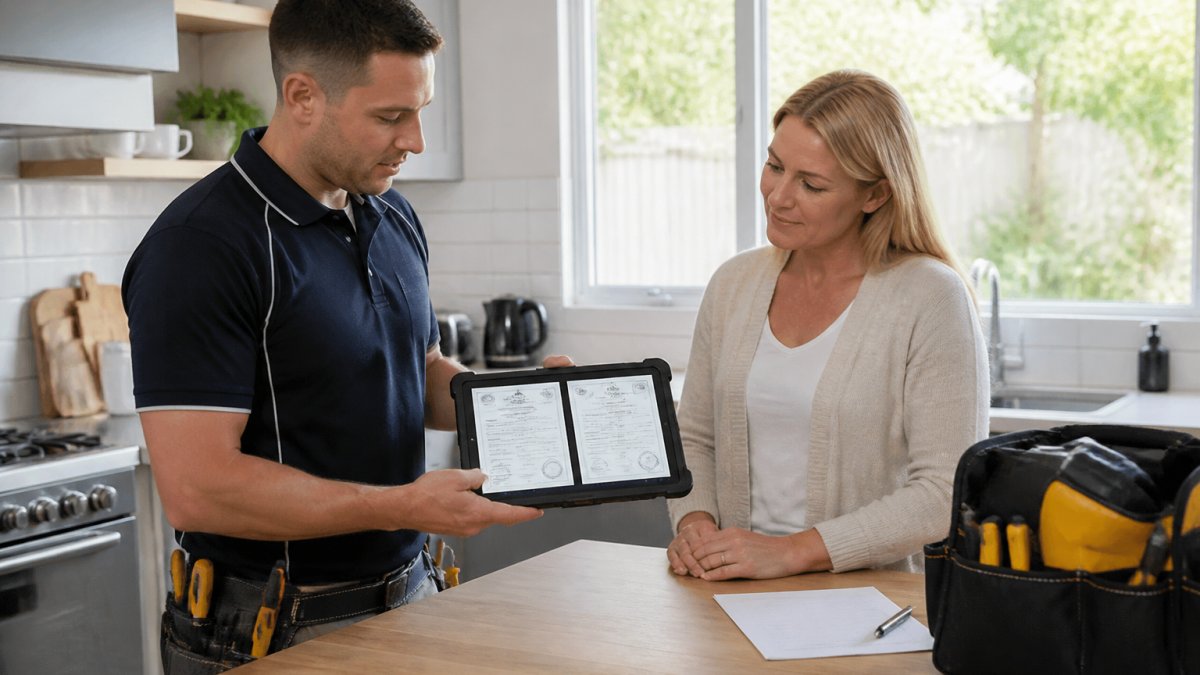
Ask for their electrical licence number upfront, a legitimate electrician provides it without hesitation. Learn why professional electrical inspections matter when vetting an electrician's credentials.
Check their insurance and workmanship guarantee. Licensed electricians carry public liability insurance. This covers damage to your home during work. Ask for a copy of their certificate.
Look for their electrical contractor number on invoices and quotes, it confirms registration as a professional contractor.
Ask how long they've done appliance installations, someone who's installed hundreds spots problems faster and knows the quirks of different brands and models.
Questions to Ask an Electrician Before Hiring
Generic questions get generic answers.
**1.
2. Is this appliance hardwired or plug-in, and does that change the job?
This is the single most useful question you can ask.
3. Will you issue a compliance certificate, and what does it cover?
In most states and territories, prescribed electrical work must be certified.
4. Will you pull any permits or notifications required for this job?
5. What is your call-out fee, and is it credited against the job?
6. Who supplies the materials, you or me?
7. What is your workmanship guarantee, and how long does it run?
8. What happens if the appliance is faulty out of the box?
Appliance faults aren't the electrician's fault, but the handling matters.
**9.
References from new-build rough-ins aren't the same as appliance retrofits in occupied homes.
Getting an Appliance Installation Quote
A quote for appliance setup is a scope document, not a single number. Good electricians break the job into parts; bad ones give a lump sum and surprise you later.
What a proper appliance quote itemises
A quote you can compare should list, at minimum:
- Attendance and call-out, the fee to come to your property, stated separately from labour.
- Labour, hours estimated and the hourly or fixed rate, in dollars.
- Materials, cable, conduit, circuit breaker, isolating switch, powerpoint, and any sundries, each with a price.
- Circuit work, whether a new dedicated circuit is required, and the price if so.
- Switchboard work, whether a new breaker or safety switch is needed, and the price.
- Testing and certification, the compliance certificate and any test documentation, and whether it is included.
- Disposal or make-good, removal of packaging or old appliance, patching, and cleanup, if offered.
- GST, stated separately so you can compare pre-GST and post-GST totals.
If a quote is a single line, "appliance installation, $X", ask for the breakdown before you compare it to anything else.
The cost drivers that actually move the price
Two quotes for the same appliance can differ by hundreds of dollars because of job conditions, not margin. Main drivers:
- Hardwired versus plug-in. A plug-in appliance on an existing dedicated circuit is the simplest job. A hardwired appliance needing a new circuit from the switchboard is the most involved. The difference is cable run length, breaker cost, and labour time.
- Distance from the switchboard. A short run through a single wall is cheap. A long run through a brick cavity, ceiling space, or multiple rooms adds cable, conduit, and time.
- Switchboard capacity. If your board has no spare way or is an older fuse board, the electrician may need to add a breaker or recommend a board upgrade. Ask whether the quote assumes your board has capacity.
- Access and make-good. Tiled splashbacks, double brick, and finished ceilings increase labour. Ask whether the quote includes making good after cable runs.
- Appliance requirements. Some cooktops and ovens specify a particular circuit rating or isolating switch position. The electrician should confirm the appliance's requirements from the manual before quoting.
- Travel and after-hours. Remote locations and weekend or evening attendance carry a premium. Ask whether the quoted price is for standard hours.
How to compare quotes like-for-like
Put the quotes side by side and align them on these five points:
- Same scope? Does each quote include the new circuit, the isolating switch, testing, and the certificate? A cheaper quote that excludes certification is not cheaper.
- Same materials? Compare the cable size, breaker brand, and switch type. A quote using a lower-grade breaker is not equivalent.
- Same hours? Compare the labour estimate. A quote with three hours against one with six may be more efficient, or may be underestimating the job.
- Same inclusions? Check whether call-out, GST, and make-good are in or out.
- Same guarantee? Compare the workmanship guarantee period and what it covers.
Only after those five alignments should you look at the total. The lowest aligned total is the fair comparison; the lowest headline number often is not.
What to do if a quote seems too cheap
What to do if a quote seems too high
Ask for the breakdown. A high quote is sometimes justified by a difficult cable run or switchboard upgrade, sometimes a premium for a busy contractor, comparing the itemised breakdown against a second quote tells you which.
For more on reading electrical quotes, see our Electrical Maintenance Services Quote Guide.
A proper appliance quote breaks down the job into itemised parts so you can compare fairly.
| Quote Component | What It Includes | Why It Matters |
|---|---|---|
| Attendance and call-out | Fee to visit your property | Stated separately from labour |
| Labour | Hours estimated and hourly or fixed rate | Allows comparison of time estimates |
| Materials | Cable, conduit, breaker, switch, powerpoint | Each priced so you see what you pay for |
| Circuit work | New dedicated circuit if required | Cost driver that varies by job |
| Switchboard work | New breaker or safety switch if needed | Depends on board capacity |
| Testing and certification | Compliance certificate and test docs | Proves work meets applicable standard |
| Disposal or make-good | Packaging removal, patching, cleanup | Affects final site condition |
| GST | Goods and Services Tax | Stated separately for total comparison |
Electrical Installation Safety Checklist
Safety during installation matters as much as the final result. Use this checklist to ensure your electrician follows proper procedures.
Before work starts:
- Power is isolated at the switchboard for the relevant circuit
- All tools and equipment are in good condition
- The work area is clear of hazards
During installation:
- The electrician tests circuits with a multimeter before touching wires
- All connections are secure and properly insulated
- New circuits are labelled clearly in your switchboard
- The electrician wears appropriate personal protective equipment
After installation:
- All circuits are tested and working correctly
- Your safety switch is tested and functioning
- The job site is cleaned up
- You receive documentation of the work completed
Learn more about electrical safety practices in our guide on Electrical Safety Tips for Homeowners: 7 Essential Steps. This covers broader safety principles that apply to all electrical work in your home.
A licensed electrician knows these steps by heart. If an electrician skips safety checks or seems rushed, that's a red flag.
What Happens During Installation and After
Understanding the installation process sets realistic expectations and helps you spot if something's going wrong.
The electrician arrives and assesses the job, checking your existing setup, measuring distances, and planning the wiring route.
Next, they isolate power to the relevant circuit and test to confirm it's off before touching anything.
They run new wiring if needed, for hardwired appliances, cable from your switchboard to the appliance location, routed safely through walls or conduit.
They test everything, multimeter checks, safety switch testing, and a full run-through of the appliance.
After installation, ask for documentation, a certificate of electrical safety or similar paperwork proving the work was done to code.
Comparing Bids and Making Your Final Decision
Three quotes give you enough data to decide wisely. Don't just pick the cheapest option.
Compare scope first. Are all three quotes covering the same job?
Look at credentials and experience.
Consider the timeline. A slightly higher quote from someone who can start this week might beat a cheap quote from someone booked three months out.
Check customer feedback.
Trust your gut. You want an electrician who listens, explains clearly, and makes you feel confident, if they rush you or seem dismissive, keep looking.
Ready to move forward? Contact Auscore Integrated Services for a quote on your appliance installation. Our team provides upfront pricing, transparent communication, and fully licensed, insured workmanship.
Hiring a licensed electrician for appliance setup protects your home, your safety, and your investment.
Frequently Asked Questions
Which appliances require a licensed electrician to install?
Hardwired appliances such as ovens, cooktops, dishwashers, and hot water systems must be installed by a licensed electrician. Split-system air-conditioning units, EV chargers, and fixed exhaust fans also require professional electrical work. Portable appliances that plug into a standard powerpoint do not require licensed installation. Always check your appliance manual or contact your supplier to confirm installation requirements, as some items may need both plumbing and electrical work.
How do I verify a licensed electrician's credentials in Western Australia?
Check the electrician's licence with the Energy Safety office or verify their electrical contractor number through the official registry. Ask for proof of current insurance and workmanship guarantee documentation. Request references from recent appliance installation jobs and follow up with at least one previous customer. A qualified electrician will readily provide this information upfront and should have no hesitation showing you their credentials before work begins.
What should I ask an electrician before hiring them for appliance setup?
Ask about their experience with your specific appliance type, whether they provide upfront pricing, how long the job typically takes, and what happens if issues arise after installation. Confirm they will provide a quote in writing, explain the job scope clearly, and ask about their response time for callbacks. Find out if they offer a workmanship guarantee and what documentation you'll receive upon completion. These questions help you assess their professionalism and ensure you understand the full scope before work begins.
How do I compare electrician quotes for appliance installation?
Request quotes from at least two or three qualified electricians. Compare the job scope, materials included, labour costs, call-out fees, and timeline for each quote. Ensure all quotes address the same appliance and installation requirements so you can make an accurate comparison. The lowest price isn't always the best value; consider the electrician's experience, credentials, and warranty terms. Ask each electrician to explain what's included in their quote so you understand what you're paying for.