 how-to
Preventing Flickering Lights in Older Homes
Last Updated: November 1, 2026
Quick Summary
Preventing flickering lights in older homes starts with checking the simplest cause first: a loose bulb, which you can reseat or replace yourself. If flickering moves between rooms or affects several lights at once, it likely signals a loose neutral or loose wiring, which is a fire risk that requires a licensed electrician.
- A loose bulb is the most common and least serious cause of a single flickering light.
- Loose connections overheat and are a genuine fire hazard, not a DIY fix.
- LEDs draw far less power, so a standard dimmer often cannot regulate them properly.
- Press the test button on every safety switch monthly; it should trip immediately.
- Never open a switch plate, fitting, or switchboard to investigate a flicker yourself.
Table of Contents
- Why Flickering Lights in Older Homes Need Attention
- Common Causes of Flickering Lights in a House
- Flickering LED Lights and Dimmer Compatibility
- Electrical Safety Checks for Older Homes
- Spotting Outdated Wiring, Aluminium Wiring and Faulty Fittings
- When to Call an Electrician for Flickering Lights
- Book a Licensed Electrician to Inspect Your Home's Wiring
- Frequently Asked Questions
Why Flickering Lights in Older Homes Need Attention
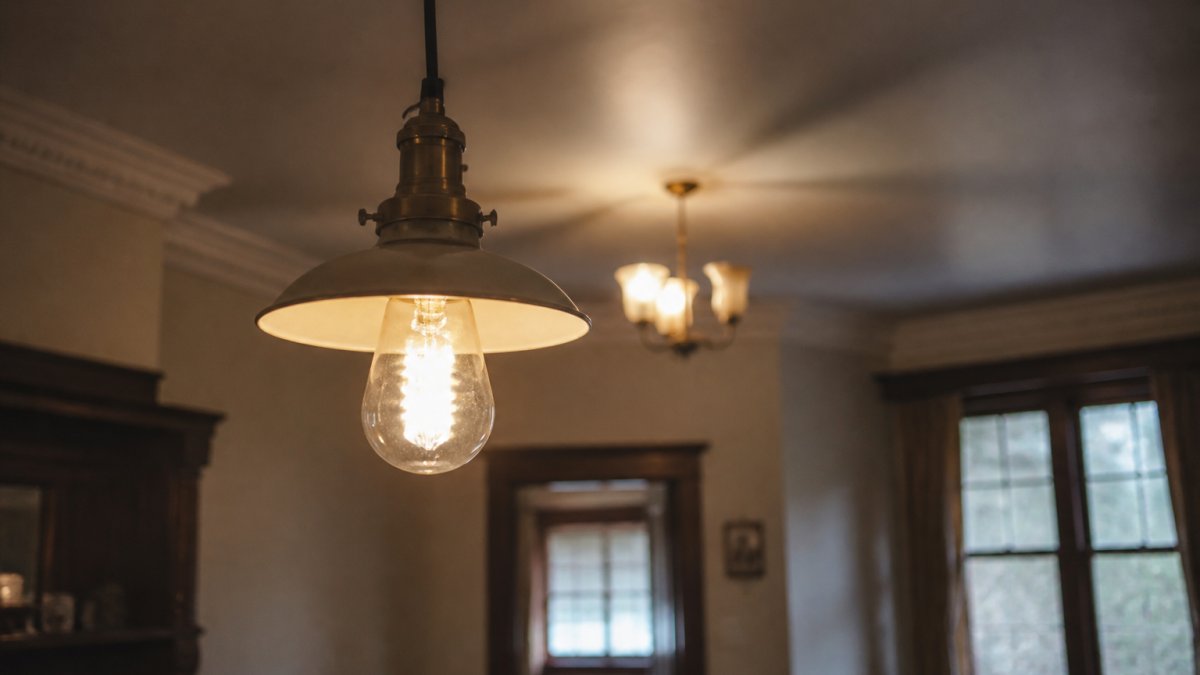
Flickering lights in older homes are more than a nuisance. They are often the first visible sign of a wiring problem that has been building quietly for years.
Older properties carry specific risks. Wiring installed decades ago may not match today's electrical loads. Insulation cracks. Connections loosen.
This guide covers the real causes, the checks you can safely do yourself, and when to call a licensed electrician.
Common Causes of Flickering Lights in a House
The causes of flickering lights in a house usually fall into three groups: loose bulbs, loose wiring, and overloaded circuits. For the full step-by-step fix, see our guide to fixing flickering lights. Each has a different fix.
Here is the short version:
| Cause | Typical Symptom | Who Should Fix It |
|---|---|---|
| Loose bulb | One light flickers, others fine | Homeowner |
| Loose wiring or neutral | Random flickering across several rooms | Licensed electrician |
| Overloaded circuit | Lights dim when appliances start | Licensed electrician |
| LED and dimmer mismatch | Flicker only when dimmed | Homeowner or electrician |
| Outdated wiring | Intermittent flicker plus warm fittings | Licensed electrician |
Loose Bulbs and Poor Bulb-to-Socket Contact
A loose bulb is the most common and least serious cause. The bulb sits slightly off its contact point, so the connection breaks and remakes, producing a quick, random flicker.
Start here before anything else:
- Switch off the circuit and let the bulb cool.
- Check the bulb is screwed in firmly but not forced.
- Look for corrosion or a flattened contact tab inside the socket.
If a new bulb in a tight socket still flickers, the problem is behind the fitting, not in it.
Loose Wiring, Connections and the Loose Neutral
Loose connections are the cause that worries us most. A loose neutral wire can send voltage swinging across the whole home, causing random flickering in several rooms at once, not just one fitting.
Watch for these signs:
- Lights brighten and dim without anyone touching a switch.
- Flickering moves between rooms.
- Fittings feel warm or smell faintly of hot plastic.
Loose connections overheat. That is a genuine fire hazard, not something to fix with a screwdriver and a YouTube video.
Overloaded Circuits and Voltage Fluctuations
An overloaded circuit shows itself when a big appliance starts. Turn on the oven or the air-conditioner and the lights dip. The circuit is carrying more load than it was designed for.
Older homes often run the whole house on a handful of circuits, and modern appliances erase the margin. Voltage fluctuations from the street supply can also cause flicker, but a licensed electrician needs to test for that before anyone blames the utility.
Flickering LED Lights and Dimmer Compatibility
Flickering LED lights and dimmer compatibility is the most misunderstood issue on this list. LEDs draw far less power than the old bulbs the dimmer was built for, so a standard dimmer often cannot regulate them properly.
The fix is usually simple:
- Check the dimmer is LED-rated.
- Match the dimmer to the bulb's minimum load.
- Replace old dimmers rather than swapping bulbs endlessly.
A common scenario is a homeowner who replaces halogens with LEDs, sees the lights flicker, and assumes the wiring is faulty. Often the cause is simply an incompatible dimmer, and swapping it for an LED-rated model can stop the flicker.
Electrical Safety Checks for Older Homes
Electrical safety checks for older homes should focus on the parts that age worst: the switchboard, the wiring, the safety devices, and the fittings. A simple walk-through catches most problems before they become expensive.
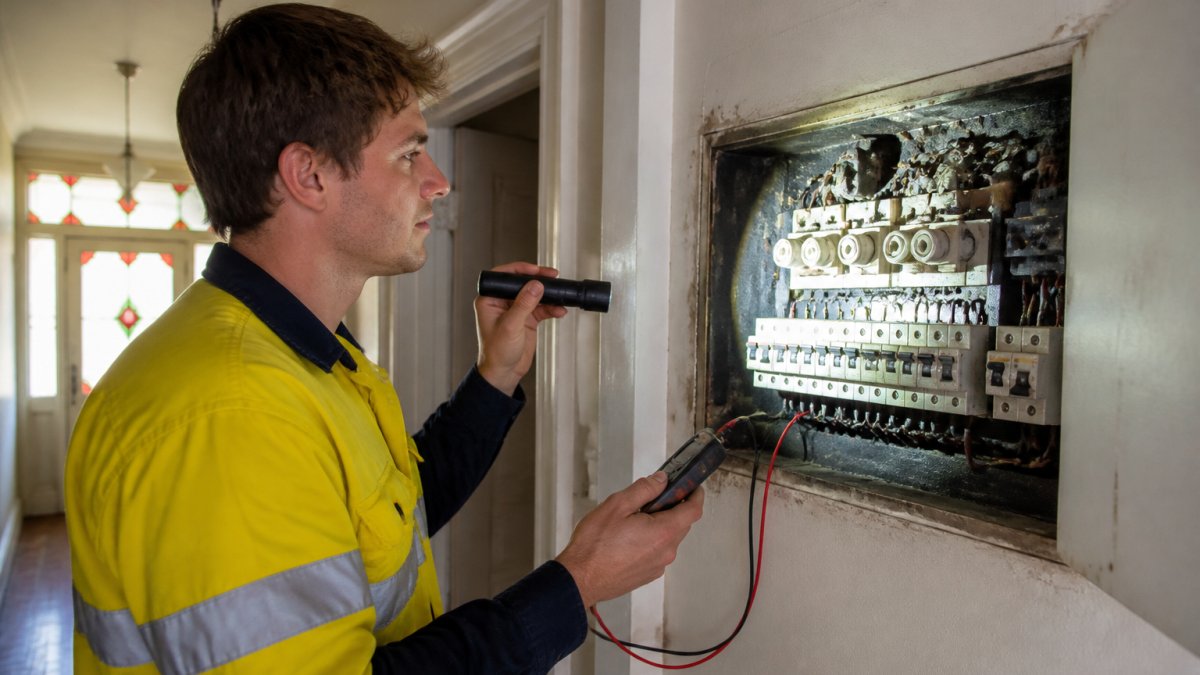
A Room-by-Room Walk-Through
Work through the home in a set order so nothing is missed. This is the checklist we use on older properties:
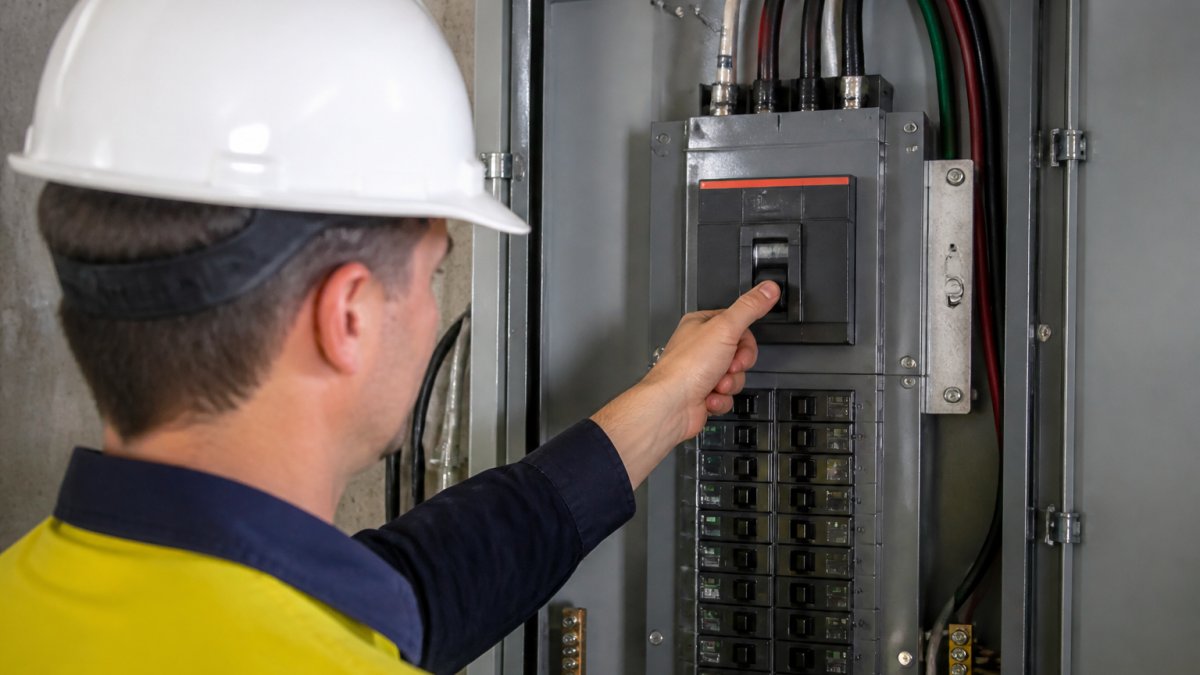
- Switchboard first. Look for scorch marks, discolouration, or a burning smell. Confirm the board has a main switch and at least one safety switch (RCD). Press the test button on each safety switch, it should trip immediately. If it does not, the device is not protecting you.
- Every light fitting. Switch each light on and off. Note any that flicker, buzz, feel warm to the touch after a few minutes, or have cracked sockets or missing covers. Warmth and buzzing are early signs of a loose connection or an overloaded fitting.
- Every switch and power point. Check for loose plates, cracks, scorch marks, or a switch that needs a firm push. A switch that feels spongy or crackles is on its way out.
What Each Finding Means
A checklist is only useful if you know how to read the results. Here is how we interpret the common findings:
| Finding | What it usually means | Urgency |
|---|---|---|
| Safety switch will not trip | Device has failed; no protection against earth faults | Book an electrician promptly |
| Warm or buzzing fitting | Loose connection or overloaded fitting; fire risk | Stop using that light until checked |
| Scorch marks at the board | Overheating connection or failing component | Treat as urgent |
| Perished cable insulation | Cable has reached end of life; shock and fire risk | Needs assessment before further use |
| Missing or corroded earth | Fault current has no safe path | Urgent, do not ignore |
| Flicker across multiple rooms | Likely a loose neutral or supply-side issue | Book an electrician |
How Often to Repeat the Checks
Older homes benefit from a rhythm rather than a one-off inspection:
- Monthly: press the test button on every safety switch. This is a two-minute job and the single most useful habit you can build.
- Every six months: walk the rooms and check fittings, switches, and power points for warmth, buzzing, cracks, or discolouration.
- Annually: a visual check of the switchboard and any visible cable, plus a smoke alarm test and battery check.
When a Check Should Become a Call
Some findings are safe to note and monitor. Others should trigger a call to a licensed electrician the same day:
- A safety switch that will not trip.
- Any burning smell, scorch mark, or spark at a fitting, switch, or the board.
- A fitting or switch that is hot to the touch.
If your home still runs on old ceramic fuses, an upgrade is worth discussing with your electrician. For a closer look at which safety devices protect an older property, our guide to home electrical safety devices explains what each one does.
Spotting Outdated Wiring, Aluminium Wiring and Faulty Fittings
Outdated wiring rarely announces itself. It hides behind plaster and under insulation until something fails. Knowing the warning signs helps you act before a flicker becomes a repair bill.
Look for these clues:
- Aluminium wiring: common in homes built in the 1960s and 1970s. It expands and contracts, so connections loosen over time.
- Perished insulation: brittle, cracked, or crumbling cable sheathing.
- Faulty switches: a switch that feels loose, buzzes, or needs a firm push.
Copper wiring lasts well when installed properly. Aluminium wiring and damaged wiring need a professional inspection, not a patch-up.
When to Call an Electrician for Flickering Lights
Not every flicker needs the same response. The fastest way to decide what to do is to read the symptom: where the flicker happens, when it happens, and what else is going on at the same time. Use this guide to work out whether you are looking at a bulb, a circuit, the service connection, or the supply coming into the home.
Symptom-Based Decision Guide
| What you see | Most likely cause | What to do |
|---|---|---|
| One light flickers, others in the room are steady | Loose bulb or poor bulb-to-socket contact | Switch off, let it cool, reseat or replace the bulb. If it persists, call an electrician. |
| Flicker only when a dimmer is turned down | LED and dimmer mismatch | Check the dimmer is LED-rated and matched to the bulb's minimum load. Replace the dimmer if needed. |
| Lights dim when the oven, air-conditioner, or another large appliance starts | Overloaded circuit or shared circuit | Note which appliances trigger it and call an electrician to assess the circuit load. |
| Flicker moves between rooms, or several rooms flicker at once | Loose neutral or loose connection in the wiring | Stop using the affected circuits and call an electrician. This is a fire risk. |
| Whole home flickers, sometimes with lights brightening | Supply-side or service connection issue | Call your electricity distributor and an electrician. Do not ignore. |
| Flicker comes and goes with weather or at the same time each day | Utility-side voltage fluctuation | Report it to your distributor; an electrician can confirm it is not the home's wiring. |
| Flicker plus buzzing, heat, or a burning smell | Faulty fitting, switch, or connection | Treat as urgent. Switch off the circuit if safe and call an electrician immediately. |
Local Problem or Whole-Home Problem?
The single most useful question is: how far does the flicker reach?
- One fitting only: almost always the bulb, the socket, or the fitting itself. Start with the bulb.
- One circuit (several lights on the same circuit): likely a loose connection or an overload on that circuit. An electrician needs to test it.
- Whole home: the fault is at the switchboard, the main neutral, or the supply coming in. This is the point where you call both your distributor and an electrician.
A quick test helps: switch off the affected circuit at the board and see whether the flicker stops elsewhere. If other circuits are also affected, the problem is upstream of the individual circuit.
Urgent Warning Signs, Act Now
Some symptoms mean stop and call, not monitor. Treat these as urgent:
- A burning smell near a fitting, switch, or the switchboard.
- Sparks, arcing, or a buzzing sound at a switch or fitting.
- A switch or fitting that is hot to the touch.
If you see or smell any of these, switch off the affected circuit at the board if it is safe to do so, keep clear of the fitting, and call a licensed electrician. If there is smoke or fire, evacuate and call emergency services first.
What to Tell the Electrician
A clear report shortens the diagnosis and the repair. Before you call, note:
- Which lights flicker and which do not.
- Whether the flicker is constant or intermittent.
- What else is running when it happens (appliances, heaters, the air-conditioner).
A professional inspection finds the fault, tests the circuit, and confirms the repair is safe. Our article on the benefits of professional electrical inspections covers what an inspection involves and why it is worth doing before problems start.
Book a Licensed Electrician to Inspect Your Home's Wiring
Preventing flickering lights in older homes comes down to one habit: get the wiring checked before it fails.
Auscore Integrated Services is a fully licensed and insured team delivering electrical, air-conditioning and communications work for residential and commercial clients in Perth.
If you want the wiring in your older home checked properly, book residential electrical work with our team or contact us for a free quote.
Frequently Asked Questions
Why are the lights in my old house flickering?
In older homes, flickering lights usually trace back to a loose bulb, a worn switch or dimmer, loose wiring connections, or an overloaded circuit. Ageing wiring and voltage fluctuations from the supply can also play a part. Start by checking that the bulb is screwed in firmly and swapping it for a known good one. If the flickering continues, or affects more than one fitting, it is worth having a licensed electrician inspect the circuit and switchboard.
Can LED lights flicker because of an incompatible dimmer?
Yes. Flickering LED lights and dimmer compatibility are closely linked. Many older dimmer switches were designed for incandescent bulbs and do not supply the minimum load an LED needs, which causes flicker, buzzing or a limited dimming range. The fix is usually an LED-rated dimmer matched to the bulb's specifications. Check the bulb packaging for dimming guidance, and have an electrician confirm the dimmer and load are compatible before replacing fittings.
When should I call an electrician for flickering lights?
Call a licensed electrician if flickering affects several rooms at once, comes with buzzing, burning smells or discoloured switch plates, or keeps returning after you have replaced the bulb. Whole-home flickering, or flickering that coincides with appliances switching on, can point to a loose neutral or an overloaded circuit. These are safety risks that need proper testing rather than guesswork.
Are flickering lights a sign of a serious electrical problem?
Sometimes. A single flickering bulb is often just a loose connection at the fitting, but random flickering across a circuit can indicate loose wiring, a failing switch or dimmer, or a loose neutral at the switchboard. In older homes with outdated or aluminium wiring, these faults can overheat and become a fire hazard. If flickering is intermittent and widespread, book an electrical safety check rather than ignoring it.
A flickering light in an older home is easy to ignore and expensive to neglect. If your lights are telling you something, get a licensed electrician to listen. Auscore Integrated Services offers upfront quotes, fully licensed tradespeople, and a workmanship guarantee on every job. Get started with Auscore Integrated Services and put your flickering lights to rest.