 how-to
Air Conditioner Tripping the Breaker: Causes and Fixes
Last Updated: November 8, 2026
Quick Summary
An air conditioner trips breaker protection when it draws more current than its circuit can safely carry, or when a fault causes a short, overload or earth leakage. The breaker is protecting your wiring, so the real task is finding what pushes the circuit past its limit.
- Turn the air conditioner off and avoid repeatedly resetting the breaker.
- If the breaker trips immediately, suspect a short, wiring fault or compressor problem.
- If it trips after a few minutes, check the dirty air filter and blocked outdoor coil.
- Never fit a larger breaker to stop the trips; it can let cables overheat.
- Burning smells, scorch marks or buzzing mean switch off and call a licensed electrician.
Table of Contents
- Why Your Air Conditioner Keeps Tripping the Circuit Breaker
- Stop First: Immediate Safety Steps When the Breaker Trips
- Air Conditioner Trips Breaker Immediately: What It Usually Means
- Air Conditioner Trips Breaker After a Few Minutes: Overheating and Airflow Faults
- Air Conditioner Circuit Breaker Size: Is the Circuit Undersized?
- Step-by-Step Troubleshooting: Telling an AC Fault from a Circuit Fault
- Repeated Resets, Fire Risk and Repair Costs: When to Call an Electrician
- Booking a Licensed Electrician to Diagnose Your Air Conditioner Breaker
- Frequently Asked Questions
Why Your Air Conditioner Keeps Tripping the Circuit Breaker
Your air conditioner trips the circuit breaker when it draws more current than its circuit can safely carry, or when a fault causes the circuit to detect a short, overload or earth leakage.
Some causes are simple to check at home. Others need a licensed electrician with the right test equipment. This guide explains both, so you know what to try and when to stop.
Here is what most often causes the trip:
- A dirty air filter or blocked coil that makes the unit work harder
- A failed fan motor or capacitor
- A damaged wire or loose connection
Stop First: Immediate Safety Steps When the Breaker Trips
Before you check anything, turn the air conditioner off at the wall controller or remote. Do not keep resetting the breaker over and over. Each reset sends current back into a circuit that has already faulted.
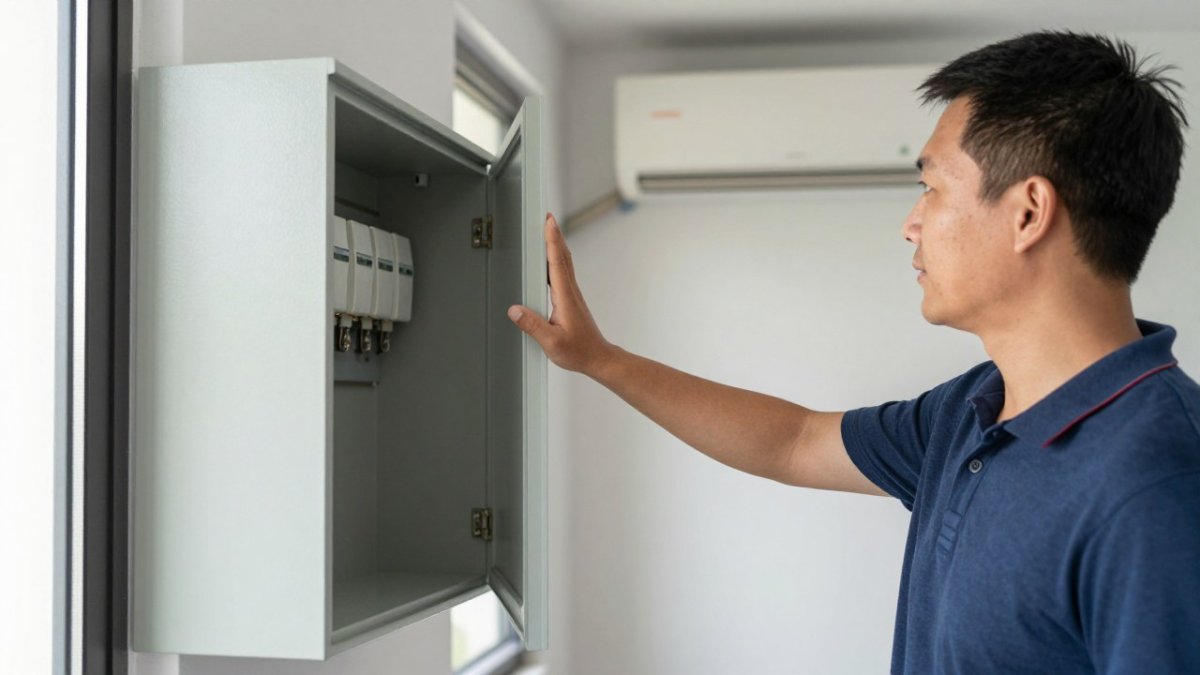
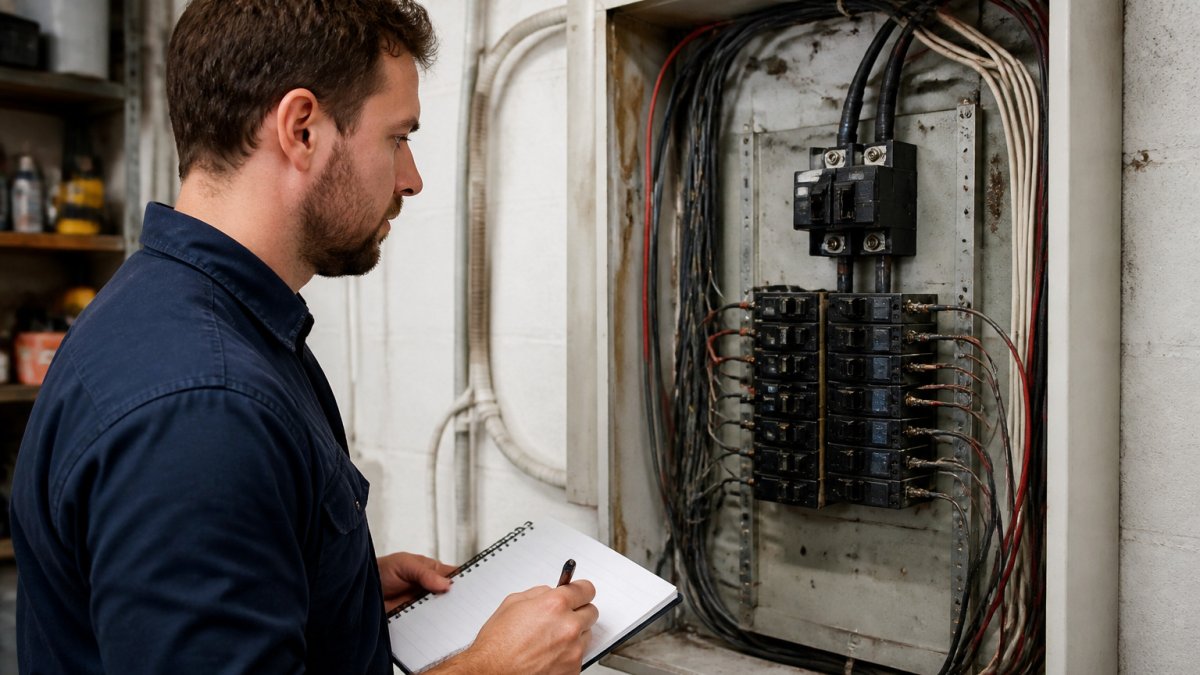
If you smell burning, see scorch marks, hear buzzing or crackling, or see water near the switchboard, switch off the air conditioner and leave the breaker off. Call a licensed electrician straight away.
What not to do:
- Do not open the switchboard or outdoor unit while it is wet
- Do not replace a breaker with one of a higher rating to stop the trips
- Do not poke wiring or components with metal objects while the power is on
The Energy Safe Victoria electrical safety guidance and similar state regulators advise that repeated tripping should always be investigated rather than ignored. For general household electrical safety guidance before you attempt anything yourself, see Electrical Safety Tips for Homeowners.
Air Conditioner Trips Breaker Immediately: What It Usually Means
When the breaker trips as soon as you switch the unit on, the fault is usually in the wiring, the motor or the compressor circuit. The breaker sees a sudden surge and cuts power within seconds.
Short circuit, shorted motor or damaged wiring
A short circuit happens when a live wire touches a neutral or earth path. Damaged insulation from age, rodents or water is a common cause outdoors. A shorted motor winding can do the same thing.
Signs to look for:
- The breaker trips the instant you press start
- The unit makes no sound before it trips
- Visible damage to outdoor cable insulation
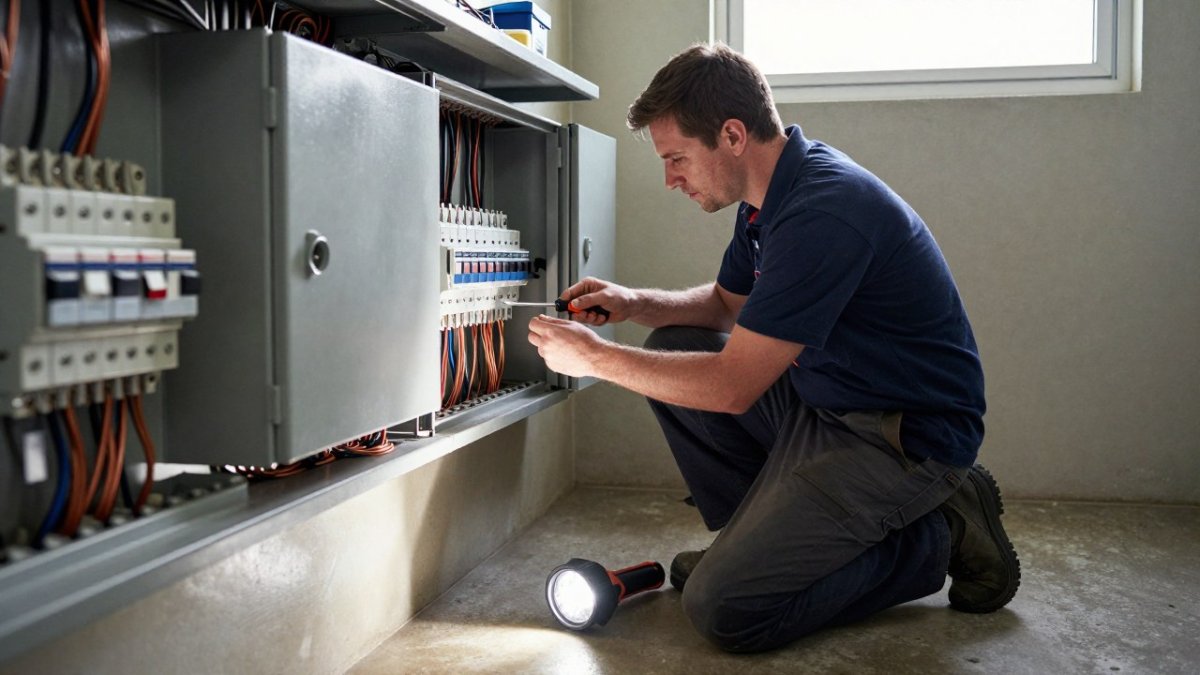
Stop here and call an electrician. Locating a short needs insulation testing equipment and the work involves live circuits.
Failed compressor or starting capacitor
The compressor needs a large burst of current to start. A weak starting capacitor or a failing compressor can draw too much current at startup and trip the breaker.
Watch for a unit that hums loudly, clicks, or tries to start several times before it trips. These are signs the compressor or capacitor is struggling. Replacing a capacitor is a licensed job, so do not attempt it yourself.
Air Conditioner Trips Breaker After a Few Minutes: Overheating and Airflow Faults
If the unit runs for a while before the breaker trips, the system is probably overheating. The electrical circuit is fine at first, but restricted airflow or heat build-up pushes the current up over time.
Dirty filters, blocked coils and restricted airflow
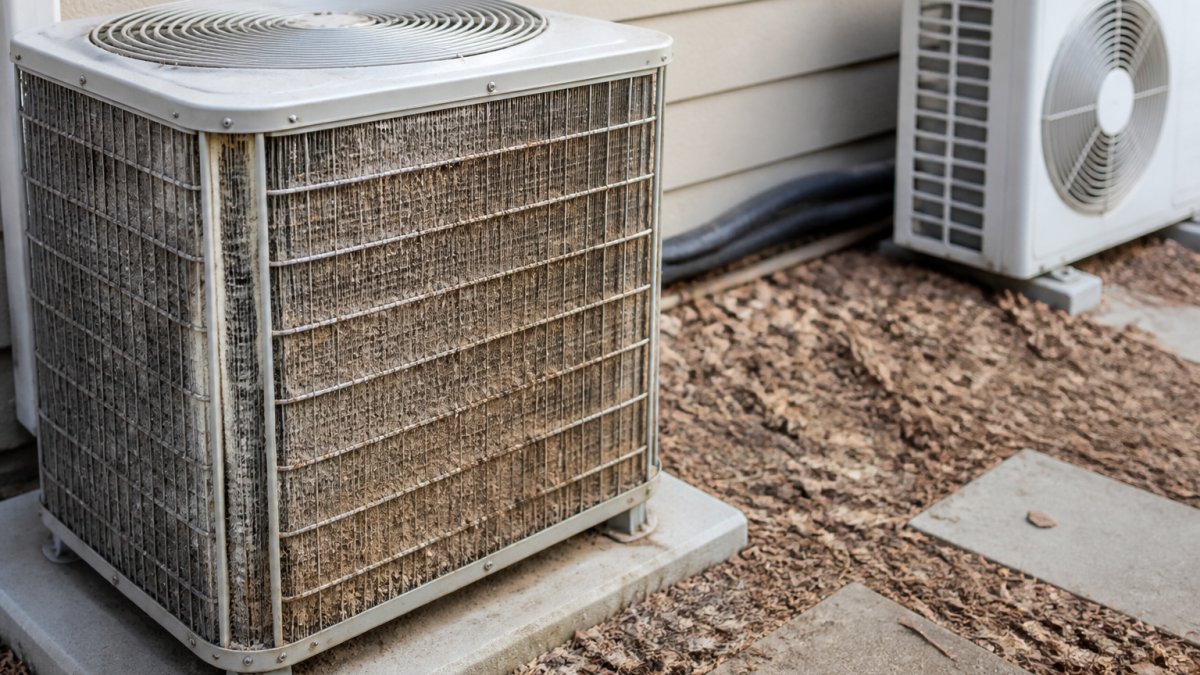
A dirty filter forces the fan and compressor to work harder. Dirt on the outdoor condenser coil does the same. Over time this drives the current up enough to trip the breaker.
Quick checks you can do safely:
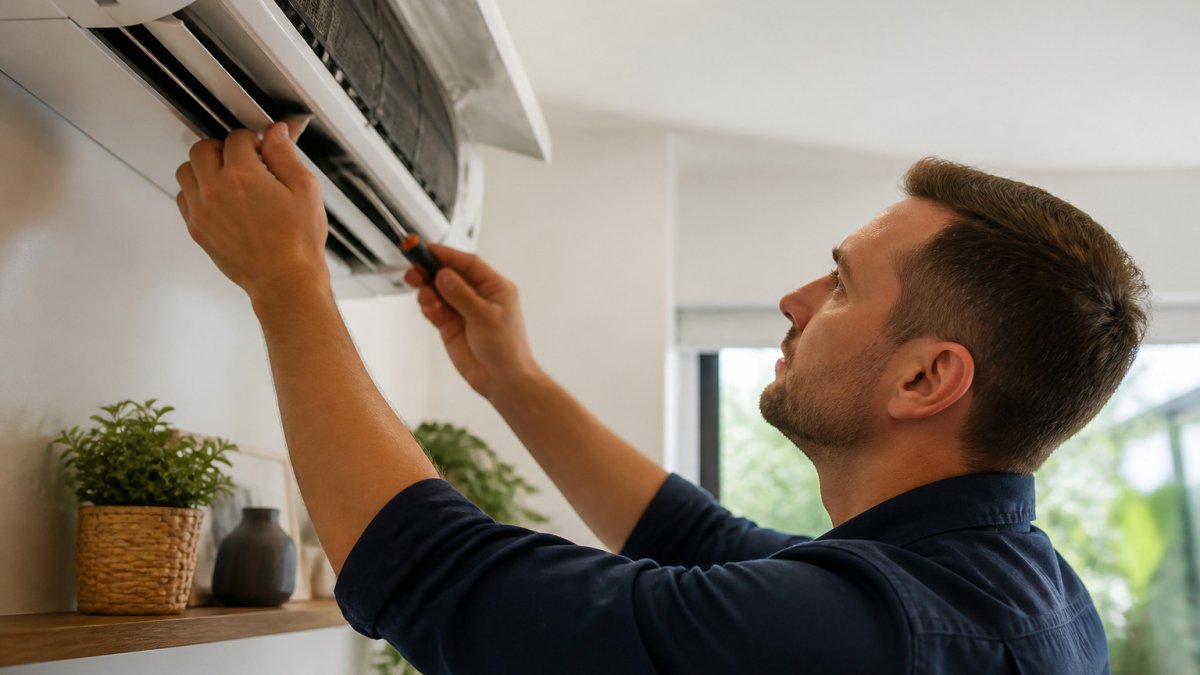
- Switch the unit off and remove the indoor filter
- Rinse or vacuum the filter, then let it dry fully before refitting
- Check the outdoor unit for leaves, dust or debris, and clear the area around it
Only clean the outdoor coil with the power off at the isolator, and avoid high-pressure water on the fins.
A common mistake is cleaning the filter and expecting the trips to stop when the fault is elsewhere.
Fan motor and outdoor unit faults
The outdoor fan moves heat away from the condenser. If the fan motor is failing, it draws more current and the unit overheats. A seized or obstructed fan will often cause the trip after a few minutes.
Listen for a grinding, squealing or silent fan while the compressor runs. An electrician can test the motor safely and replace it if needed.
Air Conditioner Circuit Breaker Size: Is the Circuit Undersized?
Sometimes the breaker is simply too small for the load it protects, and no amount of cleaning or resetting will fix that. An air conditioner draws its highest current at compressor startup, then settles to a lower running current. The circuit, the cable and the breaker all have to be matched to both figures, not just the running current. When they are not, the breaker trips on normal operation and looks like a fault when it is really a design problem.
This is more likely in three situations:
- The unit was added to an existing circuit rather than given a dedicated one
- A larger or higher-capacity unit replaced an older, smaller one without the circuit being upgraded
- Other appliances share the same breaker, so the combined load exceeds the rating
Reading the nameplate and the breaker
The outdoor unit has a rating plate, usually on the side panel.
A common pattern is a breaker rating that sits below the unit's startup demand, or a cable that is too small for the breaker fitted.
Watch out: never fit a larger breaker to stop the trips. The breaker is matched to the cable, and a bigger breaker can let a cable overheat before the protection operates.
Undersized circuit versus a genuine fault
The timing helps tell them apart. An undersized circuit tends to trip when the compressor starts, especially on hot days when head pressure and startup current are highest, and it may run fine in mild weather.
Matching the breaker and cable to the load is licensed electrical work. The correct fix may be a dedicated circuit, a cable upgrade, or both, and it should be confirmed against the wiring rules rather than guessed from the switchboard label alone.
Step-by-Step Troubleshooting: Telling an AC Fault from a Circuit Fault
Use this simple order to narrow down the cause:
- Switch the air conditioner off and check the breaker. If it trips the moment you turn on the unit, suspect a short, wiring fault or compressor problem.
- Test with other appliances. Run a fridge or a kettle on the same circuit. If it trips without the air conditioner running, the fault is in the circuit or breaker, not the unit.
- Check the filter and outdoor unit. If the trip happens after a few minutes, clean both and retest.
- Note the timing. Immediate trips point to electrical faults. Delayed trips point to overheating or airflow problems.
- Stop and call a professional if the breaker trips again after your checks, or if any warning sign appears.
Each step rules out a possible cause. Do not skip the note on timing, as it narrows the fault quickly for the electrician.
- Immediate trip: likely wiring, short or compressor fault
- Delayed trip: likely filter, coil, fan or airflow fault
- Trips on other appliances too: likely circuit or breaker fault
Use this table to match what you observe to the most likely cause before you call for help.
| Symptom | Likely cause | Next step |
|---|---|---|
| Trips the moment you start the unit | Short, wiring fault or compressor problem | Stop and call an electrician |
| Trips after a few minutes | Overheating or airflow fault | Clean filter and outdoor unit, then retest |
| Trips when other appliances run | Circuit or breaker fault | Stop and call an electrician |
| Trips mainly at startup on hot days | Undersized circuit or breaker | Ask for circuit capacity check |
| Burning smell, scorch marks or buzzing | Serious electrical fault | Switch off and call an electrician |
Repeated Resets, Fire Risk and Repair Costs: When to Call an Electrician
Resetting a breaker again and again is not a fix. Each trip stresses the breaker and the wiring, and a fault left unchecked can cause heat damage at connections and inside cable insulation.
Treat these as stop-now signs rather than reset-and-retry signs:
- A burning smell near the switchboard or the outdoor unit
- Scorch marks, discolouration or melted plastic at the breaker or isolator
- Buzzing, crackling or arcing sounds
If any of these appear, switch the air conditioner off, leave the breaker off, and call a licensed electrician. To see what a professional check involves, read Benefits of Professional Electrical Inspections.
Deciding between repair and replacement
The right decision depends on the cause, the age of the unit and the cost of the fix relative to a new system. A useful way to frame it:
- If the fault is in the circuit, the breaker or the wiring, the air conditioner may be fine and the repair is electrical work on the home.
- If the fault is a capacitor or fan motor, the repair is usually contained and worth doing on a unit with life left in it.
- If the compressor has failed or the system has a serious refrigerant fault, the repair can approach or exceed the value of an older unit, and replacement becomes the sensible comparison.
Costs vary with the fault, the equipment and the access, so treat any figure as a guide only.
A filter clean remains a low-cost homeowner task. Capacitor, fan motor, cable and dedicated-circuit work cost more, and a compressor or refrigerant fault costs more again.
Australian Standard AS/NZS 3000 wiring rules overview explains the wiring and protection requirements that apply to circuits like this.
Booking a Licensed Electrician to Diagnose Your Air Conditioner Breaker
If the breaker keeps tripping after you have run through the checks above, it is time to book a diagnosis.
Auscore Integrated Services is a fully licensed and insured Perth team. Electrical Contractor Number EC16983 covers our electrical work. We provide upfront quotes.
If your air conditioner is the source of the problem, our air-conditioning service team can check the unit itself. If the fault points to the home's wiring or switchboard, our residential electrical electricians can test and repair the circuit.
Next step: Note how often the breaker trips and what the unit was doing at the time.
Frequently Asked Questions
Why does my air conditioner keep tripping the circuit breaker?
Repeated tripping usually means the circuit is drawing more current than it is rated for, or a fault is leaking current to earth. Common causes include a dirty filter or blocked outdoor coil that makes the compressor work harder, a failing starting capacitor, a shorted fan motor, or damaged wiring. Because the breaker is doing its job, the fault is real and should be diagnosed rather than ignored. A licensed electrician can test the circuit and the unit to find the cause safely.
Is it safe to reset an air conditioner circuit breaker?
Resetting a breaker once, after turning the air conditioner off at the unit and switching the breaker fully off before switching it back on, is generally safe. Resetting it repeatedly is not. Each trip is a warning that something is overloaded, shorted or overheating, and repeated resets stress the breaker and wiring and can lead to overheating or electrical fire. If it trips again shortly after resetting, stop and switch the unit off until a licensed electrician has inspected it.
Can a dirty air filter cause an air conditioner to trip the breaker?
Yes. A dirty filter restricts airflow across the evaporator coil, which can cause the coil to freeze and the system to work harder for longer. That extra strain can push the compressor and fan to draw more current than the circuit can handle, particularly on hot days. Cleaning or replacing the filter is a simple first check, but if the breaker still trips after the filter is clean, the cause is likely electrical or mechanical and needs professional diagnosis.
Should an air conditioner have its own circuit breaker?
In most installations a dedicated circuit is the correct approach, because an air conditioner draws a large, continuous load that should not share a circuit with other appliances. The breaker size should match the unit's rated current and the cable size, as set out in AS/NZS 3000 (the Wiring Rules). If an air conditioner is sharing a circuit or the breaker is undersized, a licensed electrician can assess whether a dedicated circuit is needed.