 how-to
7 Reasons Air Conditioning Units Lose Efficiency
Last Updated: November 2, 2026
Quick Summary
Air conditioning efficiency drops when clogged filters block airflow, dirty condenser and evaporator coils lose heat transfer, leaky ducts waste cooled air, and mechanical wear or low refrigerant charge reduce cooling output. Most underperforming systems trace back to these same handful of causes, ranging from a five-minute filter fix to licensed technician work.
- Check the air filter monthly during heavy use and clean or replace it as needed.
- Keep the outdoor condenser unit clear of plants and debris to protect heat transfer.
- A small gap between supply-air and return-air temperature suggests the system is not removing much heat.
- Refrigerant handling, leak detection, evacuation, and recharge are licensed work in Australia.
- Work through filter, outdoor clearance, and thermostat setting before booking a service.
Table of Contents
- Why Air Conditioning Units Lose Efficiency: The Seven Causes That Matter
- 1. Clogged Air Filters and the Dirty Air Conditioner Filter Symptoms to Watch For
- 2. Dust and Debris on the Condenser and Evaporator Coils
- 3. Leaky Ducts and Poor Insulation Wasting Cooled Air
- 4. Mechanical Wear in Compressors, Motors, and Bearings
- 5. Refrigerant Charge, Leaks, and Coil Condition
- 6. Thermostat Settings, Runtime, and Realistic Cooling Expectations
- 7. When Your Air Conditioner Is Not Cooling Efficiently: A Diagnostic Sequence
- Frequently Asked Questions
Why Air Conditioning Units Lose Efficiency: The Seven Causes That Matter
Air conditioning efficiency is the measure of how well a unit turns electricity into cooled air. When that ratio slips, you pay more for less comfort. Most underperforming systems trace back to the same handful of causes.
Most guides blame one thing: a dirty filter. That is only part of the story. Seven causes matter, and they range from a five-minute fix to a job that needs a licensed technician.
Below, we break down each cause, how to spot it, and what to do about it. We also give you a diagnostic sequence so you can tell a simple maintenance issue from a failing component.
1. Clogged Air Filters and the Dirty Air Conditioner Filter Symptoms to Watch For
A clogged filter is the most common cause of lost cooling, and the cheapest to fix. When dust packs the mesh, air cannot pass through. The unit runs longer, cools less, and the fan works harder than it should.
Watch for these dirty air conditioner filter symptoms:
- Weak airflow from the vents
- Visible grey dust on the filter mesh
- The indoor unit frosting up
- A musty smell when the system starts
- Higher power bills with no change in use
Check the filter monthly during heavy use. Clean or replace it as needed. This one habit protects airflow and takes pressure off the whole HVAC system.
2. Dust and Debris on the Condenser and Evaporator Coils
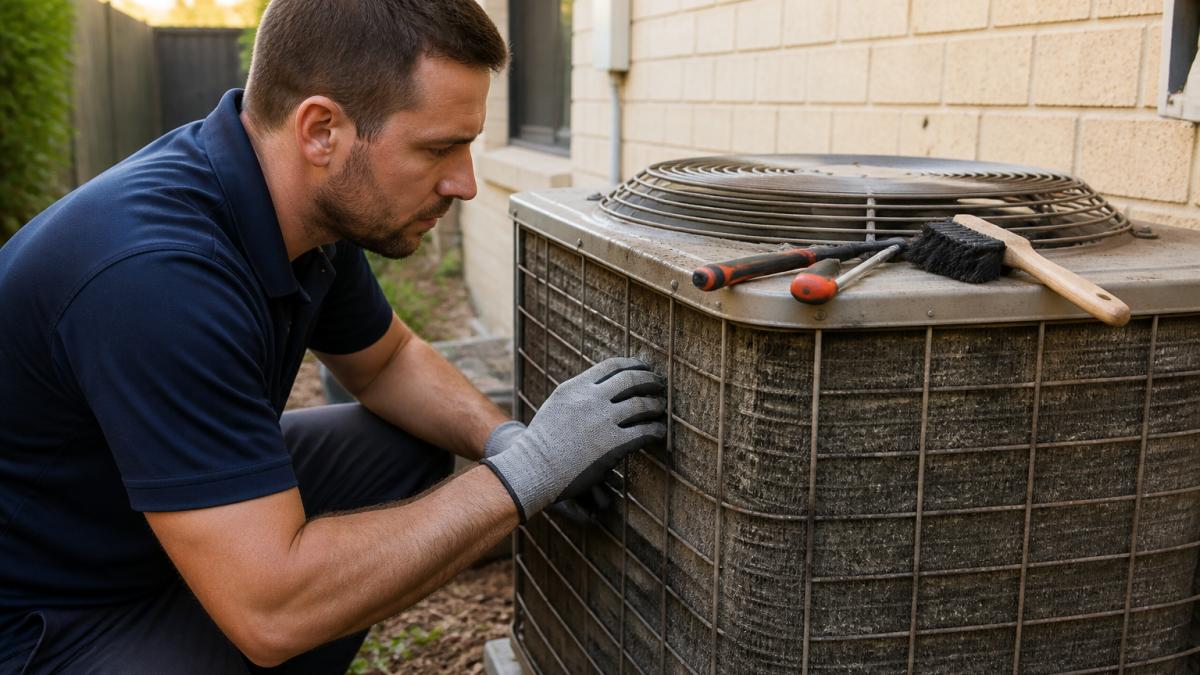
The coils do the heat transfer, and dirt blocks it. The condenser coil sits outdoors and collects leaves, dust, and grime. The evaporator coil sits indoors and gathers dust from the return air.
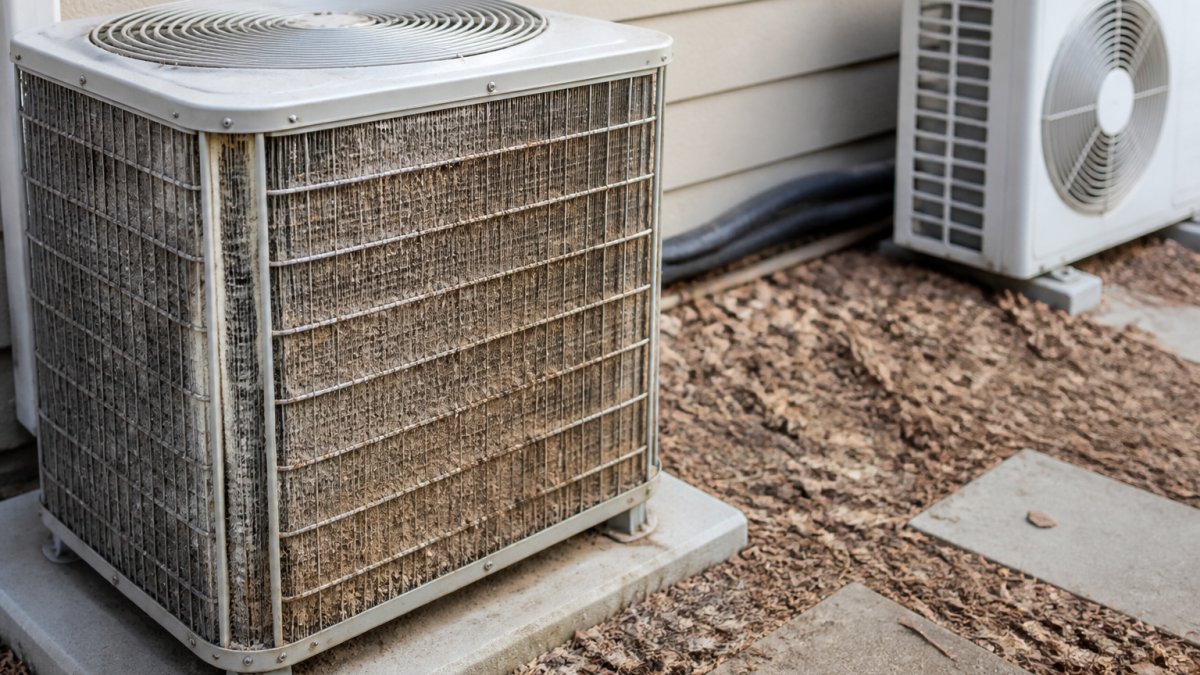
When either coil is coated, the system struggles to cool. You get reduced cooling capacity and longer runtime. Keep the outdoor unit clear of plants and debris, and have the coils cleaned as part of routine maintenance.
3. Leaky Ducts and Poor Insulation Wasting Cooled Air
Ductwork carries the cooled air, and leaks waste it before it reaches a room. Poorly insulated ducts also pick up heat from the roof space. The unit works hard, but the air arrives warm.
Signs of leaky ducts include:
- Rooms that never get cool
- Uneven temperatures between rooms
- High electricity use
- Dusty vents
A technician can seal and insulate ductwork to cut this energy waste. It is often one of the highest-value fixes on an older system.
4. Mechanical Wear in Compressors, Motors, and Bearings
The compressor, fan motors, and bearings are the moving parts that turn electricity into cooling. As they wear, the unit can deliver less cooling for the same power draw.
What you can safely check yourself:
- Listen at the outdoor unit. A grinding or rumbling fan motor often points to bearing wear; a clicking or humming motor that will not start can indicate a failed capacitor.
- Look at the outdoor fan. If it spins slowly or stops while the compressor runs, the motor or its capacitor is suspect.
- Compare supply-air temperature at a vent with return-air temperature after the system has run for 15 to 20 minutes. A small difference suggests the system is moving air but not removing much heat.
- Note whether the unit short-cycles. Frequent starts and stops accelerate wear on the compressor and motors.
Capacitor testing and replacement, motor replacement, bearing service, and compressor diagnosis are work for a licensed technician. Refrigerant and electrical work on a compressor are licensed tasks.
If the system is older and repairs are accumulating, ongoing property maintenance from a licensed provider keeps it running and flags the point where replacement makes more sense than another repair.
5. Refrigerant Charge, Leaks, and Coil Condition
Refrigerant is the working fluid that carries heat from indoors to outdoors. The system is sealed, so the charge should not drop unless there is a leak. When charge is low, the evaporator coil runs colder than it should, frost forms, and heat transfer falls away. The unit then runs longer, cools less, and can ice up entirely.
Coil condition matters just as much. A condenser coil coated in dust and grime cannot reject heat, and an evaporator coil fouled with dust from the return air cannot absorb it. Either fault looks like low charge from the room: weak cooling, long runtime, and higher power bills.
What you can safely observe:
- Ice on the indoor coil or the refrigerant lines.
- Hissing or bubbling sounds near the indoor or outdoor unit.
- Supply air that is cool but never cold, even after 20 minutes of runtime.
- The outdoor unit running continuously without reaching the thermostat set point.
What you must not do: refrigerant handling, leak detection, evacuation, and recharge are licensed work in Australia. Do not attempt to top up a system yourself, and do not ignore a suspected leak. A licensed technician can pressure-test the system and locate the leak before repair. Topping up without fixing the leak only delays the same failure.
If the diagnosis points to a professional fix, you can request a quote from Auscore Integrated Services.
6. Thermostat Settings, Runtime, and Realistic Cooling Expectations
Sometimes the system is fine and the settings are not. A thermostat set too low makes the unit run nonstop without reaching the target, which wastes energy and adds wear.
Set a realistic indoor temperature and let the system cycle. On very hot days, no unit keeps a room icy. Runtime, outdoor temperature, and humidity all affect what your system can deliver. If the unit is simply undersized or outdated, you can ask for advice on replacement options.
7. When Your Air Conditioner Is Not Cooling Efficiently: A Diagnostic Sequence
When your air conditioner is not cooling efficiently, work through this sequence before calling anyone:
| Step | Check | If It Fails |
|---|---|---|
| 1 | Filter condition | Clean or replace it |
| 2 | Outdoor unit clearance | Clear plants and debris |
| 3 | Thermostat setting | Reset to a realistic temperature |
| 4 | Airflow at vents | Book a service |
| 5 | Ice or leaks | Call a licensed technician |
If steps 1 to 3 do not help, the cause is likely coils, ducts, refrigerant, or mechanical wear. For a deeper look at the warm-air symptom, read our guide on why your air conditioner is blowing warm air.
When the diagnosis points to a professional fix, our team can install a split system or request a quote for repairs across Perth. Every job is done by licensed, insured tradespeople with upfront pricing.
Frequently Asked Questions
Why is my air conditioner not cooling efficiently?
The most common causes are a clogged filter, dirty coils, leaking ducts, low refrigerant, or a thermostat set too high. Start by checking and replacing the filter, then look for ice on the indoor unit or weak airflow from vents. If those are fine, a licensed technician should test refrigerant pressure and inspect the coils, because air conditioning efficiency problems usually trace back to one of these seven causes.
Can dirty air filters make an air conditioner less efficient?
Yes. A clogged filter restricts airflow across the evaporator coil, so the system runs longer to reach the set temperature and uses more electricity. Common dirty air conditioner filter symptoms include weak airflow, dust around vents, a musty smell, and higher power bills. In most homes, filters need cleaning or replacement every one to three months, and more often during heavy summer use.
How often should an air conditioner be serviced?
A full service once a year is the standard, ideally before summer. Between services, follow your air conditioner maintenance checklist: clean or replace filters monthly in peak season, clear debris from around the outdoor unit, and check the thermostat batteries. Annual servicing catches refrigerant leaks and worn bearings early, before they turn into a full breakdown.
When should I replace an inefficient air conditioner?
Consider replacement when repairs exceed roughly half the cost of a new unit, when the system is over 10 to 15 years old, or when it needs frequent regassing for leaks. Rising power bills with no change in use are another signal. A licensed technician can compare the unit's condition and running costs against a modern system before you commit.
A unit that loses efficiency rarely fixes itself. The causes above range from a dirty filter to a failing compressor, and only a proper diagnosis tells you which one you are facing. At Auscore Integrated Services, our licensed and insured team handles air-conditioning service, repairs, and installation with competitive upfront quotes and a workmanship guarantee. Get started with Auscore Integrated Services and get your cooling back to where it should be.