 listicle
Signs Your Electrical Wiring Needs Replacing in Your Home
Quick Summary
Signs that electrical wiring needs replacing include flickering or dimming lights, circuit breakers that trip repeatedly, burning smells, scorch marks, and switches that feel warm. Ageing wiring with brittle insulation or frayed cables also warrants prompt inspection by a licensed electrician.
- Repeated tripping of the same circuit signals overload, a fault, or breaking insulation.
- Burning smells, scorch marks or warm switches usually mean a connection is overheating.
- Switch off the affected circuit and stop using the outlet if you notice overheating signs.
- Never reset a breaker repeatedly without finding the cause.
- Only a licensed electrician should inspect or repair fixed wiring; DIY repairs are illegal.
Table of Contents
- Warning Signs Your Electrical Wiring May Be Failing
- Old Electrical Wiring Dangers You Should Not Ignore
- How Long Electrical Wiring Lasts and What Affects It
- What to Do Immediately If You Suspect a Wiring Fault
- What a Professional Electrical Safety Inspection Involves
- Planning a Rewire Before Renovating Your Home
- Booking Your Wiring Assessment With Auscore Integrated Services
- Frequently Asked Questions
Warning Signs Your Electrical Wiring May Be Failing
Most homes don't fail electrically all at once. Faults build slowly, and the early signs are easy to dismiss as minor annoyances. Knowing what to look for can mean the difference between a planned repair and an emergency call-out. Wiring that is damaged, overloaded or ageing usually gives off warning signals first.
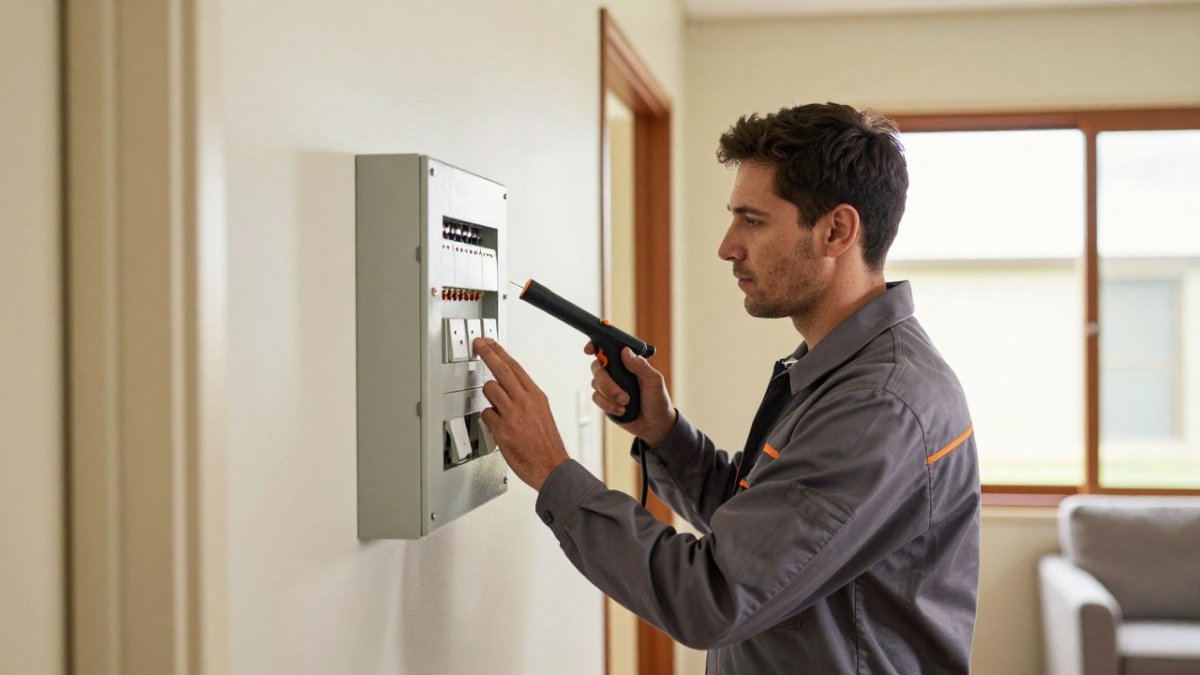
Flickering or Dimming Lights
Lights that flicker or dim when other appliances switch on often point to a loose connection or an overloaded circuit. For a deeper look at the causes and fixes, read preventing flickering lights in older homes. If the flicker only happens with one fixture, the problem may be the fitting or the globe. If it affects several lights across a room, the circuit itself deserves a closer look.
Frequently Tripping Circuit Breakers
A circuit breaker is designed to trip when current exceeds safe limits. Occasional tripping during heavy use is normal, but repeated trips on the same circuit suggest the wiring is overloaded, a fault is present, or the insulation is breaking down. Resetting the breaker without finding the cause only hides the danger. Have an electrician identify why the circuit keeps tripping.
Burning Smells, Scorch Marks and Warm Switches
A burning smell near a power point or switch is a serious warning. So are scorch marks, discolouration or a switch that feels warm to the touch. These signs usually mean a connection is overheating. If you notice any of them, turn off the affected circuit at the switchboard, stop using the outlet, and call a licensed electrician before using it again.
The most common early warning signs of failing wiring are summarised below so you can spot them quickly.
| Warning sign | What it usually means | What to do |
|---|---|---|
| Flickering or dimming lights | Loose connection or overloaded circuit | Check the fitting; if several lights are affected, inspect the circuit |
| Repeatedly tripping breaker | Overload, fault or breaking insulation | Have an electrician find the cause; do not just reset it |
| Burning smell or scorch marks | Connection overheating | Switch off the circuit, stop using the outlet, call a licensed electrician |
| Switch feels warm | Connection overheating | Stop using the switch and call a licensed electrician |
Old Electrical Wiring Dangers You Should Not Ignore
Ageing wiring carries risks that go beyond inconvenience. Insulation can become brittle, crack or perish over decades, exposing live conductors. Older homes may also lack earth leakage protection or have wiring sized for far lighter loads than modern appliances demand. Frayed or exposed wires, buzzing sounds from outlets and unexpected electric tingles when touching fittings all warrant prompt attention. Treat these as safety issues, not cosmetic ones.
How Long Electrical Wiring Lasts and What Affects It
Electrical wiring can last many decades when it is installed correctly and kept in good condition. You can check whether an older switchboard meets current WA regulations on our page Is My Old Switchboard Compliant With WA Regulations?. Lifespan depends on the wiring type, the installation quality, the load it carries and the environment it sits in. Damp areas, heat from ceiling spaces and rodent damage all shorten it. If your home is several decades old and has not been inspected, it is worth arranging an assessment, particularly before major renovations.
What to Do Immediately If You Suspect a Wiring Fault
A wiring fault can escalate from a nuisance to a fire risk in minutes, so the response should be proportional to what you are seeing, smelling or feeling. Work through the following in order.
1. Stop using the affected circuit. Unplug appliances on the circuit and stop using the power point or switch involved. Do not keep resetting a breaker to "test" whether the fault has cleared.
2. Isolate only what you need to. If the problem is confined to one outlet, one switch or one circuit, switch that circuit off at the switchboard. Leave the rest of the home powered so you retain lighting and refrigeration.
3. Escalate to the main switch when the fault is not confined. If you see sparks, smell burning, notice smoke or discolouration around the switchboard, or the breaker trips again immediately after resetting, switch off the main switch, but only if the switchboard is dry, accessible and you can reach it without touching damaged wiring.
4. Evacuate and call emergency services if there is fire or smoke. If there is visible flame, sustained smoke or a burning smell that persists after the power is off, get everyone out, call Triple Zero (000) and do not re-enter. For non-emergency fire concerns, your state fire service has a non-emergency line.
5. Call a licensed electrician. In all other cases, book a licensed electrician to inspect and repair the fault. Electrical work in Australia must be carried out by a licensed electrician, and DIY repairs to fixed wiring are illegal in every state and territory.
6. Keep people away from the area. Keep children and pets clear of the affected outlet, and do not touch fittings that feel warm, tingle or look scorched.
Watch out: never open a switchboard, remove a cover plate or probe wiring yourself to "check" a fault, even with the circuit off, adjacent terminals and the main incoming supply can remain live.
Is it a repair or a whole-home rewire? One faulty outlet, one warm switch or a single tripping circuit usually points to a local repair: a loose termination, a worn accessory or a damaged cable section. A whole-home rewire becomes the more sensible conversation when symptoms are widespread, multiple circuits tripping, tingling at several fittings, scorch marks in more than one location, or a switchboard with no safety switches and obsolete wiring. A licensed electrician can tell the difference after testing; do not assume the worst from a single symptom, and do not assume the best from a single repair.
What a Professional Electrical Safety Inspection Involves
An electrical safety inspection is a structured assessment, not a quick look at the switchboard. Understanding the process helps you judge the report you receive and the recommendations that follow.
What the electrician checks
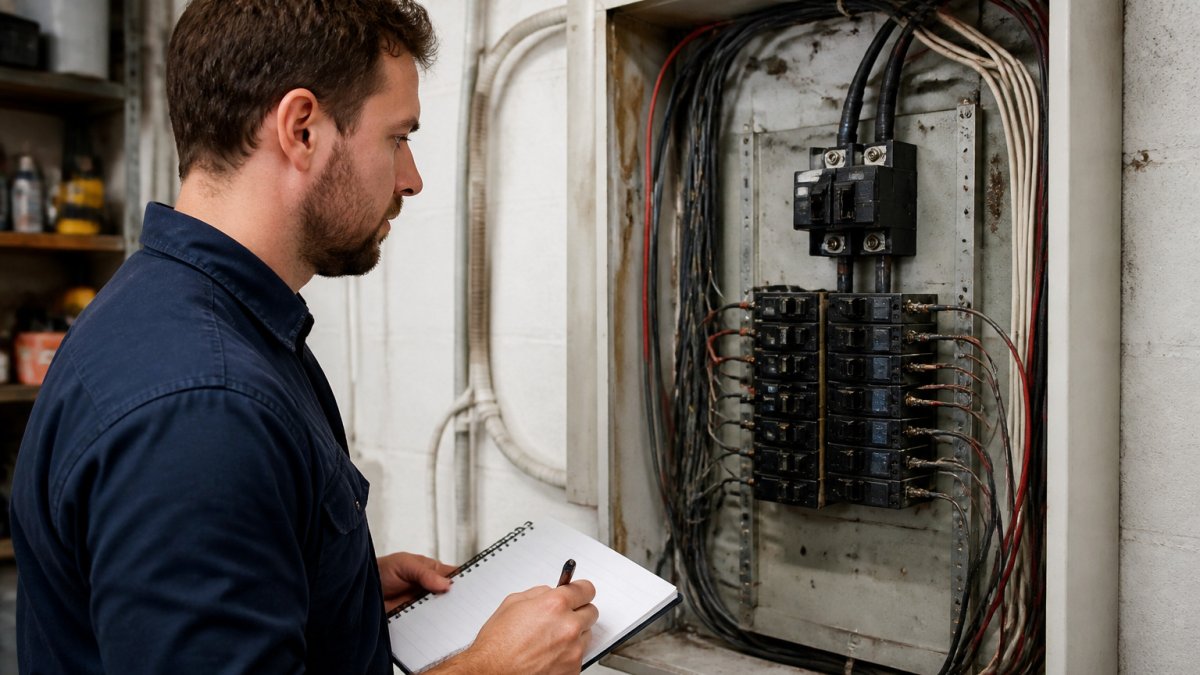
- The switchboard: condition of the board, age and type of protective devices, presence of safety switches (RCDs), and evidence of overheating, arcing or rodent activity.
- Visible wiring: cable type and condition where accessible, including ceiling spaces, subfloor areas and wall cavities where practical.
- Accessories: power points, switches and light fittings for heat damage, looseness, discolouration and correct polarity.
- Earthing and bonding: continuity of the earthing system and bonding of metallic services.
- Circuit tests: insulation resistance, polarity, continuity and RCD trip times, using a licensed electrician's test equipment.
What the report should tell you
A useful report separates findings into three categories: safe and compliant, defective and requiring repair, and obsolete or deteriorating and warranting planned replacement. Ask for the defects in writing, with the circuit and location identified, so you can compare quotes and prioritise work. If the report recommends a full rewire, it should explain why, for example, deteriorating insulation across multiple circuits, no safety switches, or wiring that cannot safely carry modern loads.
Repair versus rewire
Most inspections result in targeted repairs: replacing a worn power point, re-terminating a loose connection, upgrading a switchboard or adding safety switches. A full rewire is recommended less often, and usually when the wiring itself is at end of life or cannot be brought up to standard economically. A common pattern is a home with older wiring and a switchboard that has been partially upgraded, the electrician will explain which parts are serviceable and which are not.
Cost, scope and disruption
Inspection pricing depends on the size and age of the property, the number of circuits, and how much access is available to ceiling and subfloor spaces. A rewire is a larger project: cost is driven by the number of circuits and outlets, whether cables can be run through existing cavities or require wall and ceiling access, whether the switchboard needs replacement, and whether safety switches and smoke alarms are being upgraded at the same time. Expect the home to be without power for parts of the day during a rewire, and plan for furniture to be moved away from walls and for patching and painting after cable runs. Discuss the sequence with your electrician before work starts so the disruption is predictable.
Watch out: an inspection that produces only a verbal summary and a price for a rewire, with no written defects list, is hard to verify or compare, ask for the findings in writing before committing to major work.
Planning a Rewire Before Renovating Your Home
Renovations are the best time to assess the wiring. Opening walls and ceilings gives access to cabling that would otherwise be hidden, and it is far easier to upgrade circuits, add power points and replace old switchboards while the work is already underway. Plan the electrical scope before finishing new walls, and discuss the rewiring with your electrician early so the renovation schedule stays on track. Our residential electrical services cover wiring, lighting and switchboard upgrades for Perth homes.
Booking Your Wiring Assessment With Auscore Integrated Services
If you have noticed any of the signs above, a professional assessment is the safest next step. Auscore Integrated Services is a fully licensed and insured electrical team serving Perth homeowners and businesses. We can inspect your wiring, find the cause of faults and advise whether a repair or a wider rewire is the right answer. Pricing depends on the scope of the work, so contact us for a quote tailored to your home. Get in touch to book your wiring assessment and get clear, practical advice on your next steps.
Frequently Asked Questions
What are the signs that electrical wiring needs replacing?
The most common signs are flickering or dimming lights, circuit breakers that trip often, switches or power points that feel warm, burning smells, scorch marks or discolouration around outlets, buzzing or crackling noises, and frayed or exposed wires. A single minor symptom may have a simple cause, such as a loose connection or an overloaded circuit. Several symptoms appearing together, or any sign of heat or burning, means you should switch off the affected circuit and arrange an inspection by a licensed electrician promptly.
How do I know if my house needs rewiring?
A house needs rewiring when the wiring is worn, damaged or no longer suitable for the electrical load it carries. Older homes with ageing insulation, limited circuits or repeated faults are common candidates. A licensed electrician can assess the whole system and explain whether targeted repairs will do or whether a full rewire is the more reliable option. Obtain a written quote that sets out the scope, so you can compare the cost and disruption of each approach.
Can old wiring cause a fire?
Yes. Deteriorated insulation, overheated connections and overloaded circuits can cause arcing and heat that ignite nearby materials. Warning signs include warm switches, a burning smell, and scorch marks around power points. Because these hazards can develop without obvious symptoms, having an electrical safety inspection of older wiring is a sensible step, particularly in homes that have not been checked for many years.
Should I replace the wiring when renovating?
If renovation work will open walls or ceilings, it is usually the most practical time to assess and upgrade the wiring. Rewiring a house before renovating avoids cutting into new finishes later and allows the layout of power points, lighting and circuits to match the new design. Plan the electrical work early in the project so it can be completed before plastering, painting and fitting out.