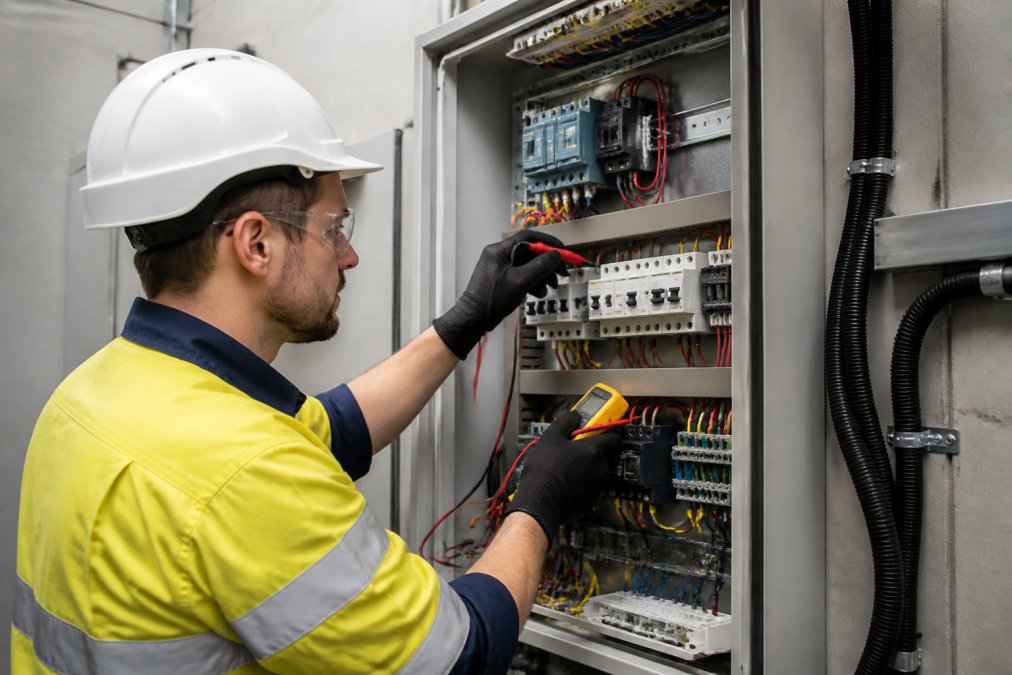
 ultimate-guide
Commercial Electrical Maintenance Contract Benefits
Table of Contents
- What Is a Commercial Electrical Maintenance Contract?
- Key Benefits of Service Agreements for Your Business
- Predictable Budgeting and Cost Control
- Priority Response Times and Emergency Support
- Electrical Compliance Checklist for Businesses
- Preventative Electrical Maintenance Schedule and Asset Longevity
- Work Health and Safety Act Electrical Requirements and Regulatory Compliance
- Calculating ROI: Is a Maintenance Contract Worth It?
- Frequently Asked Questions
Last Updated: September 21, 2026
What Is a Commercial Electrical Maintenance Contract?
A commercial electrical maintenance contract is a formal service agreement between a business and a licensed electrical contractor that establishes ongoing inspection, testing, and preventative maintenance of a facility's electrical infrastructure. Rather than calling an electrician only when something breaks, you commit to scheduled maintenance visits that identify and fix problems before they cause downtime or safety risks.
These contracts cover switchboard testing, RCD testing, thermal imaging, and test and tag procedures, with defined response times and service frequency. This transforms electrical maintenance from reactive expense into predictable operating cost.
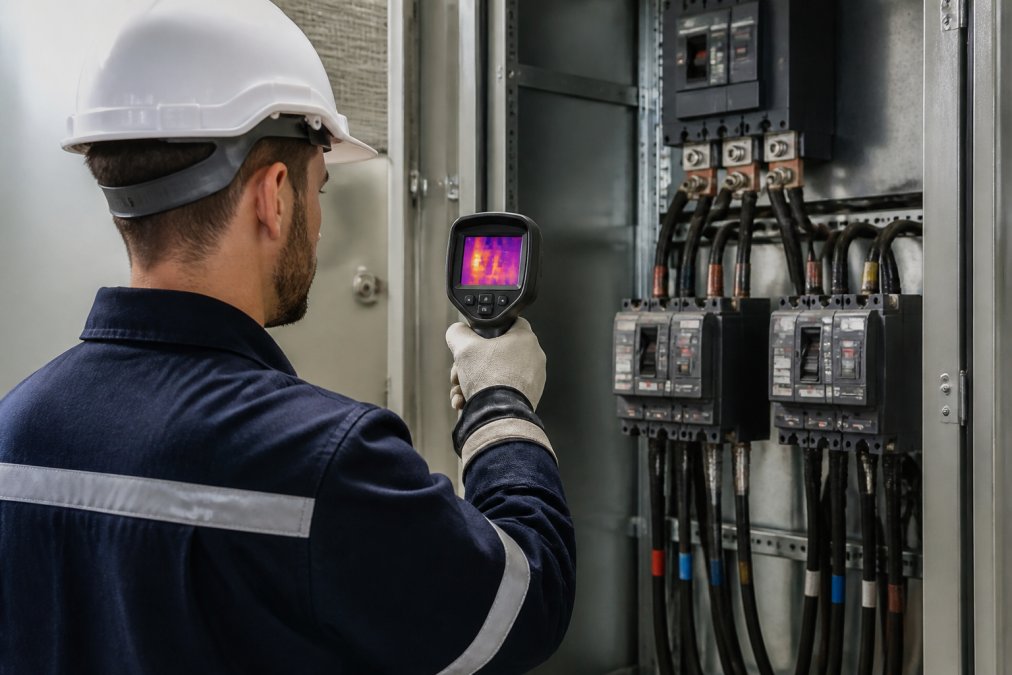
A contract ensures consistent attention on a schedule matching your risk profile, actively managing assets rather than gambling on failure timing.
Key Benefits of Service Agreements for Your Business
Business continuity is the primary benefit. Unexpected electrical failure stops operations; even hours of downtime cost thousands. A maintenance contract includes priority emergency response and, more importantly, prevents many emergencies through planned maintenance.
Predictable budgeting replaces surprise repair bills with known monthly or quarterly costs, preventing budget shock from emergency replacements.
Regulatory bodies require documented evidence of electrical safety compliance. A maintenance contract creates this documentation automatically, providing the audit trail regulators expect.
Consistent maintenance extends equipment life by catching degradation early, loose connections, dust accumulation, corrosion, delaying expensive replacements.
Predictable Budgeting and Cost Control
A maintenance contract establishes fixed fees for regular visits, eliminating budget surprises. For small and medium businesses, this predictability prevents cash flow strain from unexpected repairs. Preventative maintenance typically costs less than emergency repairs, especially after-hours callouts.
Bundled services (switchboard testing, RCD testing, thermal imaging, inspection) often cost less than individual requests. Priority scheduling lets you book maintenance during low-activity windows, avoiding emergency callout premiums.
Priority Response Times and Emergency Support
A commercial electrical maintenance contract typically guarantees 2-4 hour response times for critical emergencies. Without a contract, you call whoever is available, often at premium rates. A contractor with a maintenance agreement prioritizes you.
Contracts define emergencies (complete power loss, electrical fires, exposed wiring) versus routine issues covered in scheduled visits. After-hours support is essential for 24/7 operations and critical systems.
Electrical Compliance Checklist for Businesses
Compliance with electrical safety standards under the Work Health and Safety Act is a legal obligation. A maintenance contract creates required documentation systematically.
The Work Health and Safety Act requires electrical equipment and systems be maintained in safe condition. Each state specifies testing frequencies and documentation requirements. Regulators conduct risk-based inspections and expect complete maintenance records.
Core Compliance Tasks and Why They Matter
Switchboard inspection and testing identifies corrosion, water damage, loose connections, and confirms protective devices operate correctly. Annual testing is required; failure creates shock and fire hazards.
RCD testing confirms safety devices trip within required time (300 milliseconds). Testing is required 6-monthly for wet areas, annually for general circuits. Failure to trip creates electrocution risk.
Thermal imaging detects overheating in components, loose connections, overloaded circuits, failing parts, before failure. Annual thermal imaging is increasingly expected by regulators as best-practice prevention.
Test and tag confirms portable appliances are safe. Testing is typically annual for office equipment, more frequent in harsh environments. Regulators often check these records during inspections.
Earthing and bonding verification confirms proper grounding and low resistance, tested annually for worker safety. Cable and conduit inspection identifies damage and improper installation, typically part of annual switchboard inspection.
Load assessment confirms the system safely handles current demand. Testing is required every 2-3 years or after significant operational changes.
Documentation of every inspection, test, and task is required for regulatory audit trails. A maintenance contract creates this automatically.
A maintenance contract should specify: monthly/quarterly switchboard inspections, 6-monthly RCD testing, annual thermal imaging, annual test and tag, annual earthing verification, annual cable inspection, and 2-3 yearly load assessment. Frequency depends on facility risk profile; a licensed contractor will recommend appropriate schedules.
Regulators issue notices requiring remediation within 30-90 days; ignoring them results in enforcement orders and penalties. Remediation costs range from $500-$2,000 for minor issues to $15,000-$30,000 for switchboard replacement. Non-compliance also creates liability if someone is injured.
Confirm your contractor is fully licensed, provides written reports with specific findings and dates, maintains a compliance calendar, and understands your state's electrical safety legislation. A contractor treating compliance as risk management ensures records are complete and defensible.
Preventative Electrical Maintenance Schedule and Asset Longevity
Preventative maintenance extends the life of your electrical infrastructure. Rather than waiting for failure, planned maintenance catches problems early when they're cheaper to fix.
A typical preventative maintenance schedule looks like this:
| Maintenance Task | Frequency | Purpose |
|---|---|---|
| Visual switchboard inspection | Monthly or quarterly | Detect corrosion, damage, or unsafe conditions |
| RCD testing | 6 monthly | Confirm safety devices operate correctly |
| Thermal imaging | Annually | Identify overheating components |
| Full electrical safety audit | Annually | Comprehensive system assessment |
| Load testing and capacity review | Every 2-3 years | Ensure system handles current demand safely |
| Equipment replacement planning | Ongoing | Identify components reaching end of life |
Regular inspection catches developing issues before they become emergencies. A loose connection generates heat months before it fails completely. Dust accumulation on cooling surfaces reduces efficiency gradually. Corrosion spreads slowly. Catching these problems early, through thermal imaging, visual inspection, and testing, prevents the sudden failure that shuts down operations.
Asset longevity matters financially. Electrical switchboards and distribution boards are expensive. Extending their useful life by five years through proper maintenance saves significant capital expenditure. The same applies to connected equipment and systems.
Work Health and Safety Act Electrical Requirements and Regulatory Compliance
Australian businesses must comply with electrical safety standards under the Work Health and Safety Act and related state-based electrical safety legislation. These aren't suggestions, they're legal requirements.
The Work Health and Safety Act requires that businesses maintain electrical equipment and systems in safe condition. This means regular inspection, testing, and maintenance. Failure to maintain electrical safety can result in regulatory action, fines, and liability if someone is injured.
Each state has specific electrical safety regulations. Western Australia follows the Electrical Safety Act and regulations administered by the Energy Safety regulator. These rules specify testing frequencies, documentation requirements, and qualifications required to perform electrical work. A maintenance contract with a licensed contractor ensures compliance with these requirements.
Documentation is critical. Regulators expect to see records of inspections, test results, and maintenance performed. A maintenance contract creates this documentation automatically. Each visit is recorded with dates, findings, and work completed. When regulators ask for evidence of compliance, you have it.
Calculating ROI: Is a Maintenance Contract Worth It?
Determining whether a maintenance contract delivers value requires comparing the cost against the benefits.
The ROI Framework
Emergency repair costs prevented. A single unplanned electrical failure, a failed switchboard component, burnt-out distribution board, or corroded connection, can result in significant costs for parts and labour, often at premium after-hours rates. If your facility experiences even one major electrical failure, the contract cost can be justified. Proactive maintenance can help prevent significant electrical issues.
Worked Example
Consider a medium-sized office building:
- Annual maintenance contract cost: [Contact us for a quote]
- Prevented emergency repair: [Potential annual benefit]
- Prevented downtime: [Potential annual benefit]
- Compliance risk reduction: [Potential annual benefit]
- Equipment lifespan extension: [Potential annual benefit]
- Labour rate savings: [Potential annual benefit]
Adjusting for Your Situation
The key variables to plug into your own calculation:
- Your annual downtime cost per hour (revenue impact, operational disruption, customer impact)
- Your facility's historical emergency repair frequency and average cost
- Your equipment replacement timeline and cost
- Your regulatory environment and compliance risk tolerance
Frequently Asked Questions
What should be included in a commercial electrical maintenance contract?
A comprehensive electrical maintenance contract should include scheduled inspections, switchboard and RCD testing, thermal imaging diagnostics, fault detection and repair, compliance reporting, emergency response protocols, and specific response time guarantees. The contract defines service frequency, labour rates, parts coverage, and whether testing and tagging is included. Review the service level agreement carefully to ensure it covers your facility's specific electrical infrastructure needs and aligns with regulatory compliance requirements.
How does preventative electrical maintenance improve workplace safety?
Preventative electrical maintenance identifies electrical hazards before they cause failures or accidents. Regular inspections, RCD testing, and thermal imaging detect overheating, loose connections, and degraded equipment that could trigger fires or electrical shocks. By following a structured preventative maintenance schedule, you reduce the risk of unplanned downtime, meet Work Health and Safety Act obligations, and ensure your electrical system performs reliably. This proactive approach protects staff and equipment while demonstrating your commitment to regulatory compliance.
What is the difference between reactive repairs and a scheduled maintenance contract?
Reactive repairs occur only when something breaks, resulting in unexpected costs, emergency call-out fees, and unplanned business downtime. A scheduled maintenance contract provides planned, regular inspections and preventative work at fixed costs, reducing the likelihood of failures. With planned maintenance, you control when work happens, avoid premium emergency rates, and catch problems early. This approach delivers better operational efficiency, predictable budgeting, and improved equipment longevity compared to waiting for failures.
How can a maintenance contract help manage electrical operational costs?
Maintenance contracts offer fixed-cost budgeting, so you know your electrical maintenance expenses upfront rather than facing surprise emergency bills. By preventing equipment failures through regular inspections and fault detection, you avoid costly downtime and avoid expensive replacement of damaged switchboards or infrastructure. Bundled services often reduce labour rates compared to calling contractors ad-hoc. Additionally, efficient electrical systems consume less energy, lowering power quality issues and energy costs. This combination of predictable spending and reduced emergency expenses delivers significant long-term savings.