 ultimate-guide
Australian Electrical Safety Standards: Complete Guide
Last Updated: October 30, 2026
Quick Summary
The core Australian electrical safety standards are AS/NZS 3000:2018, the Wiring Rules, which govern how fixed electrical installations are designed, built and verified, and AS/NZS 3760, which covers in-service inspection and testing of portable equipment. These technical standards are made mandatory through workplace and electrical safety laws, so licensed electricians must follow them.
- AS/NZS 3000:2018 is the current Wiring Rules edition for fixed electrical installations.
- The Wiring Rules cover circuit protection, earthing, RCD protection and verification before energising.
- AS/NZS 3760 governs the in-service testing behind the test and tag process.
- Employers must eliminate or minimise electrical risks so far as is reasonably practicable.
- A test tag records only the equipment's condition at the time of testing.
Table of Contents
- The Core Australian Standards for Electrical Safety
- Workplace Electrical Safety Requirements Under Australian Law
- Electrical Equipment Inspection and Testing Under AS/NZS 3760
- Common Electrical Hazards: A Visual Guide to Spotting Them
- Residential Compliance and Energy Storage Safety Requirements
- Practical Electrical Safety Checklist for Homeowners and Businesses
- Booking a Compliance Check for Your Perth Property
- Frequently Asked Questions
The Core Australian Standards for Electrical Safety
Australia's electrical safety framework rests on a handful of technical standards and the laws that make compliance mandatory, with electrical safety standards forming the backbone of both. For most homeowners, landlords and small business operators in Perth, the key document is AS/NZS 3000:2018, the Wiring Rules, which sets out how fixed electrical installations must be designed, built and verified (Wiring Rules). Understanding these requirements helps you judge whether electrical work has been done properly.
AS/NZS 3000:2018 Wiring Rules Explained
The Wiring Rules are the primary Australian standard for electrical installations in buildings. They cover circuit protection, earthing, residual current device (RCD) protection, cable selection and the verification steps an installer must complete before a system is energised. The 2018 edition is the current reference point, and it is the document an inspector or electricity network operator will check against.
Most people never read it, and that is understandable. In practice, the requirements that matter most to a homeowner are straightforward: switchboards must be properly protected, RCDs must be fitted to the circuits the standard specifies, and any new work should be completed by a licensed electrician who certifies it. If an electrician cannot explain how their work meets the Wiring Rules, that is a warning sign.
Scope and Application of Electrical Standards
The Wiring Rules apply to fixed electrical installations, meaning the permanent wiring, switchboards and outlets in a building. They do not govern every electrical product you plug in, which is a distinction many property owners miss. Appliances are covered by separate product safety requirements, while the fixed installation is covered by AS/NZS 3000. Knowing which rule applies to which item clarifies who is responsible for what when something goes wrong.
Workplace Electrical Safety Requirements Under Australian Law
Technical standards describe how to do the work safely. Workplace law makes safety a legal duty. Under Western Australia's work health and safety framework, employers and those who manage a workplace must follow electrical safety standards and eliminate or minimise electrical risks so far as is reasonably practicable. This applies to offices, retail premises, strata common areas and construction sites alike.
Roles and Responsibilities of Electrical Contractors
Licensed electrical contractors carry responsibility for the work they perform and for certifying it. They must hold the correct licence, complete the required compliance documentation and ensure their installations meet the applicable standards. A property owner's responsibility is narrower but real: engage licensed tradespeople, keep records of certified work, and report any faults promptly rather than deferring them.
Penalties for Non-Compliance
Breaches of electrical safety obligations can attract fines under work health and safety and electricity legislation, and work carried out by unlicensed persons can be unlawful in its own right. The exact penalty depends on the offence and the jurisdiction, so check the current figures directly with the relevant regulator rather than relying on secondary summaries. Practically, the greater cost is usually the uninsured damage, injury or rework that follows poor work.
Electrical Equipment Inspection and Testing Under AS/NZS 3760
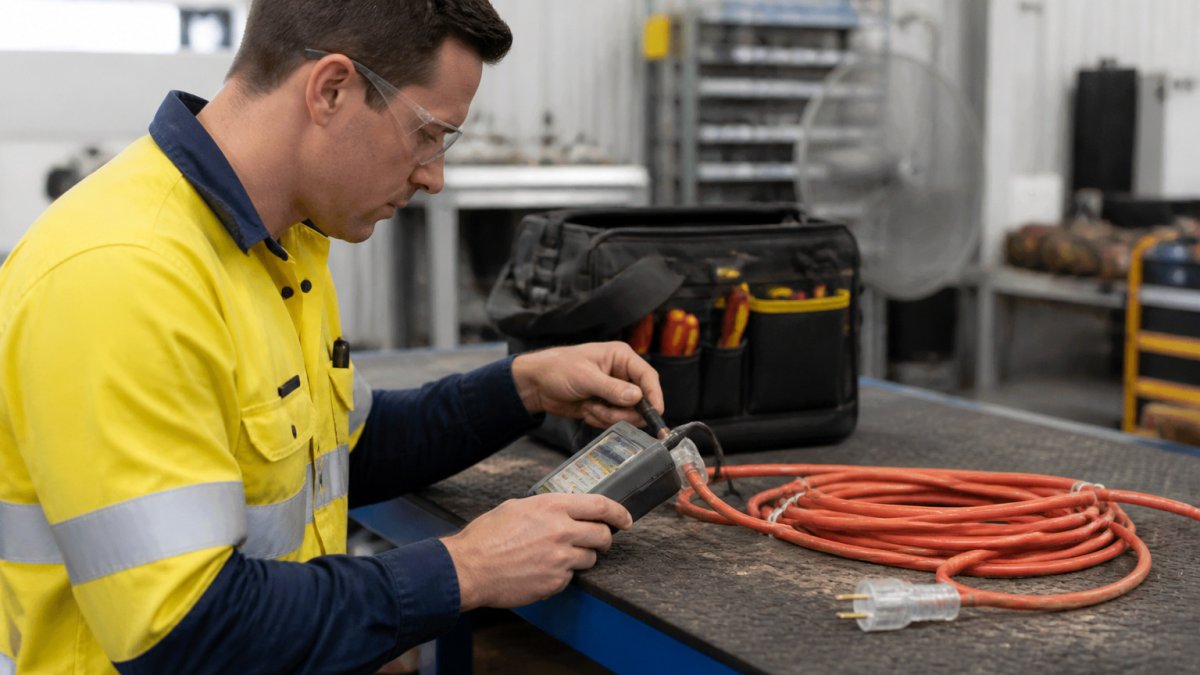
AS/NZS 3760 covers the in-service inspection and testing of electrical equipment, including portable appliances, extension leads and power boards. It is the standard behind the common "test and tag" process used in workplaces and rental properties.
In-Service Testing Intervals and Test and Tag Requirements
How often equipment must be tested depends on its type and the environment it is used in. Higher-risk settings, such as construction sites, typically require more frequent checks than an office. A tested item should carry a tag recording the date and the tester, and any item that fails should be removed from service. A common mistake is treating the tag as a permanent guarantee; it only records the condition at the time of testing.
The table below summarises the in-service testing points the article makes for portable equipment under AS/NZS 3760.
| Item | Value | Note |
|---|---|---|
| Standard | AS/NZS 3760 | Covers in-service inspection and testing |
| Equipment covered | Portable appliances, extension leads, power boards | Behind the "test and tag" process |
| Testing interval | Varies by equipment type and environment | Higher-risk settings need more frequent checks |
| Tag records | Date and tester | Shows condition only at time of testing |
| Failed item | Remove from service | Do not keep using it |
Common Electrical Hazards: A Visual Guide to Spotting Them
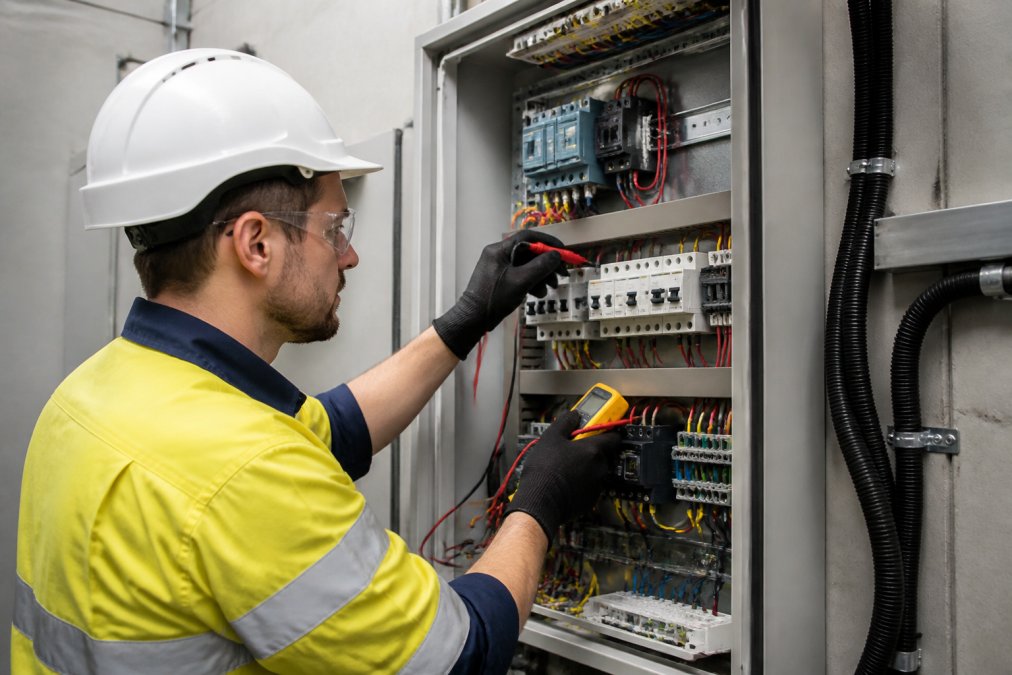
Many electrical incidents trace back to a handful of recurring hazards: damaged leads and cords, overloaded power boards, missing or failed RCD protection, and scorched outlets or switchboards. Warning signs include flickering lights, warm plugs, a burning smell, and circuit breakers that trip repeatedly. Any of these should prompt a call to a licensed electrician rather than a temporary fix.
Protection of Persons, Livestock and Property
The purpose of these standards is to protect people, animals and buildings from electric shock and fire. RCD protection is the main safeguard against electric shock, and correctly earthed installations reduce fire risk. This is why a seemingly minor fault in a switchboard deserves prompt attention.
Residential Compliance and Energy Storage Safety Requirements
Residential work carries its own compliance obligations, and these have grown as homes add solar, batteries and EV chargers. Residential air-conditioning and EV charging systems must be designed and certified to current requirements.
Compliance Requirements for Residential Installations
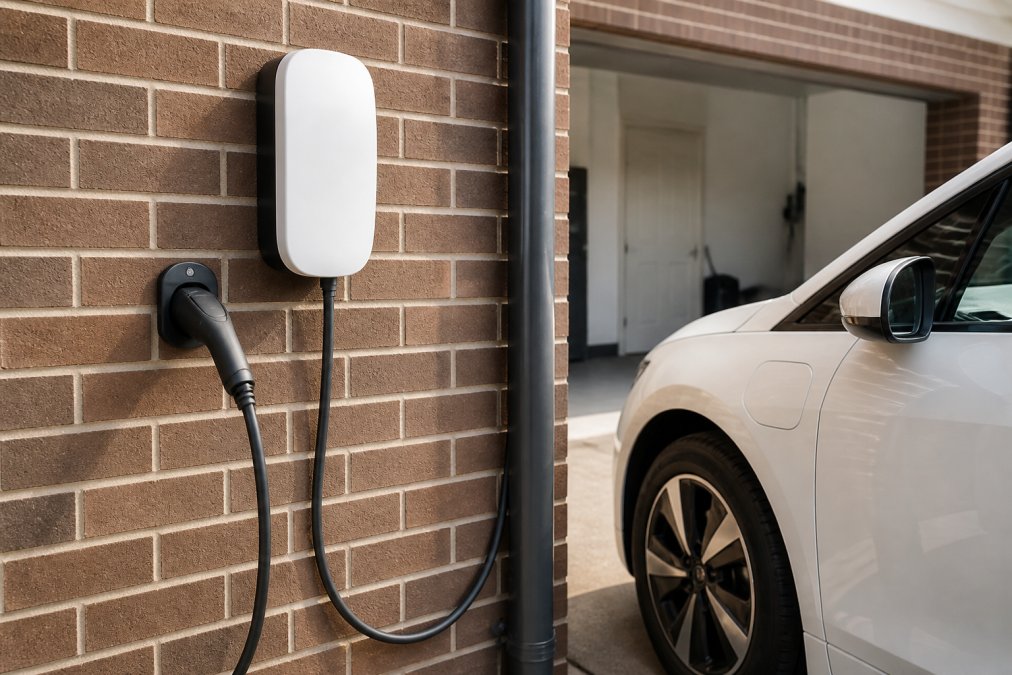
Residential installations must comply with AS/NZS 3000 and must be certified by a licensed electrician before they are used. If you need an EV charger fitted to a home, you can find EV charger installation in Perth on our website. Any new circuit, switchboard upgrade or appliance connection should be documented. Homeowners who want a compliant result should ask their electrician to explain how the work meets the standard and to provide certification. Learn more about air-conditioning installation options that meet these requirements.
Safety Requirements for Electrical Energy Storage (EES)
Home battery systems introduce additional safety considerations, including correct isolation, protection and installation location. Installations of this kind should be carried out by licensed professionals, and the system must be configured to the relevant standards.
Practical Electrical Safety Checklist for Homeowners and Businesses
A simple checklist catches many problems early:
- Switchboard is free of scorch marks, rust or loose labelling
- RCDs are fitted and tested regularly
- Power boards are not overloaded or daisy-chained
- Extension leads and appliance cords show no cracks or damage
- Outlets are not warm to the touch
- All recent electrical work has a certificate on file
- Portable appliances in workplaces have current test tags
For business premises, extend the checklist to cover staff training, a register of tested equipment, and a documented process for reporting faults. A more detailed walkthrough is available in our electrical compliance checklist for businesses.
Differences Between AS/NZS 3000 and State-Specific Regulations
AS/NZS 3000 is a national standard, but the legal obligations that apply to your property are set by state legislation and the licensing rules of the relevant regulator. In Western Australia, the state's electrical licensing and work health and safety requirements sit alongside the Wiring Rules. Where the two overlap, the stricter requirement applies, so a licensed electrician in Perth will work to both.
Booking a Compliance Check for Your Perth Property
If you are unsure whether your home or business meets current requirements, a licensed inspection is the most reliable starting point. Auscore Integrated Services provides residential electrical work across Perth. Prices depend on the scope of work, so request a quote for your specific property from our website rather than relying on a general figure. You can book residential electrical work in Perth directly through our site.
Frequently Asked Questions
What are the basic rules for electrical safety?
The basic rules are to install and repair wiring only through a licensed electrician, keep electrical equipment away from water, avoid overloading power points and extension leads, and replace damaged cords or plugs immediately. Installations in Australia must meet AS/NZS 3000:2018, the Wiring Rules, and work must be carried out by a licensed electrical worker. Switching off at the switchboard before any work and having a safety switch (residual current device) fitted to protect circuits are essential everyday precautions for homes and workplaces alike.
Which Australian standards cover electrical safety?
The main standards are AS/NZS 3000:2018 Wiring Rules, which govern the design and installation of electrical systems, and AS/NZS 3760 In-service safety inspection and testing of electrical equipment, which sets out how equipment should be checked and tagged while in use. Other relevant standards cover specific equipment and installations such as energy storage systems and EV charging. Each Australian state and territory also has its own electrical safety legislation that works alongside these standards.
How often should electrical equipment be inspected and tested?
AS/NZS 3760 sets testing intervals based on the type of equipment and the environment it is used in. Portable equipment in higher-risk workplaces such as construction sites or those with frequent movement is generally tested more often than equipment in low-risk office settings. Testing should be recorded, and any equipment that fails should be removed from service until it is repaired or replaced by a competent person.
Who is responsible for electrical safety in a workplace?
Under Australian work health and safety laws, the person conducting a business or undertaking has a primary duty to ensure electrical equipment and installations are safe so far as is reasonably practicable. Employers, property managers and contractors all share responsibilities depending on who controls the equipment, and workers must follow safe work procedures and report damaged equipment. Only licensed electrical workers should carry out electrical installation work.
What should you do if you find damaged electrical equipment?
Stop using the equipment immediately, unplug it or switch off the circuit at the switchboard, and label it clearly so nobody else uses it. Do not attempt to repair damaged wiring or plugs yourself unless you are a licensed electrician. Arrange for a qualified person to inspect, repair or replace the item, and make sure it is tested and tagged again before it returns to service.