 ultimate-guide
Commercial Switchboard Upgrade Costs: Key Factors
Table of Contents
- What Drives Commercial Switchboard Upgrade Costs
- Commercial vs Residential Switchboards: Why the Cost Gap Exists
- AS/NZS 3000 Compliance Requirements and Their Impact on Pricing
- Commercial Electrical Switchboard Replacement Timeline
- Switchboard Upgrade vs Repair: Which Makes Financial Sense?
- Hidden Cost Factors Most Quotes Miss
- Frequently Asked Questions
Last Updated: September 15, 2026
What Drives Commercial Switchboard Upgrade Costs
Commercial switchboard upgrade costs come down to four things: the electrical load the board must carry, the enclosure and switchgear you specify, the compliance work AS/NZS 3000 requires, and the downtime needed to swap it over (Wiring Rules).
A board that looks identical to the one next door can cost twice as much to replace, because the price tracks the load behind it, not the box on the wall.
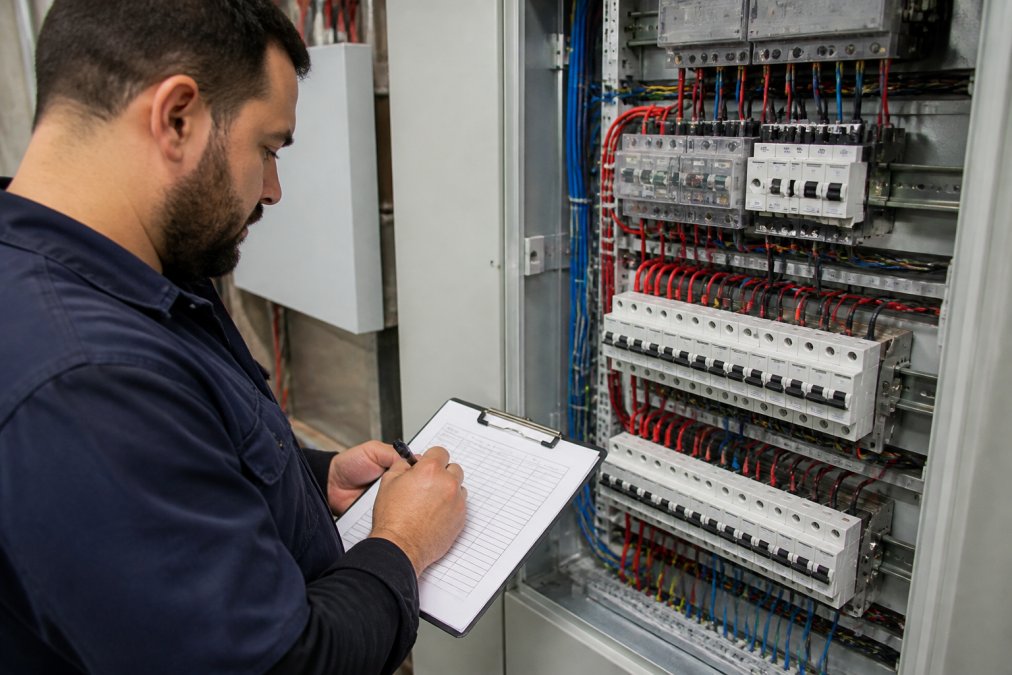
A switchboard receives supply from the network, distributes it through protective devices, and isolates circuits when something faults.
Electrical Load and Ampacity Rating
Ampacity rating is the maximum current a conductor or busbar can carry continuously without exceeding its temperature limit. The higher the rating, the heavier the copper and the larger the enclosure.
Three-phase power changes the equation: a three-phase board needs three active conductors, a neutral and earth, larger switchgear, and metering that can handle the supply arrangement. Demand from air-conditioning, kitchen equipment, EV chargers or machinery pushes the rating up further, and voltage drop across a long sub-main can force a larger cable size than the load alone would suggest.
Switchboard Enclosure, Busbar and Switchgear
The enclosure, busbar and switchgear typically account for the largest share of materials. A commercial enclosure must be sized for the busbar, protective devices, cabling bends and the working space an electrician needs to terminate safely.
Copper busbar is priced by weight and cross-section, so a higher ampacity rating costs more before labour. Circuit breakers and RCD protection add per-pole cost, and surge protection is a line item many quotes leave out until you ask.
Commercial vs Residential Switchboards: Why the Cost Gap Exists
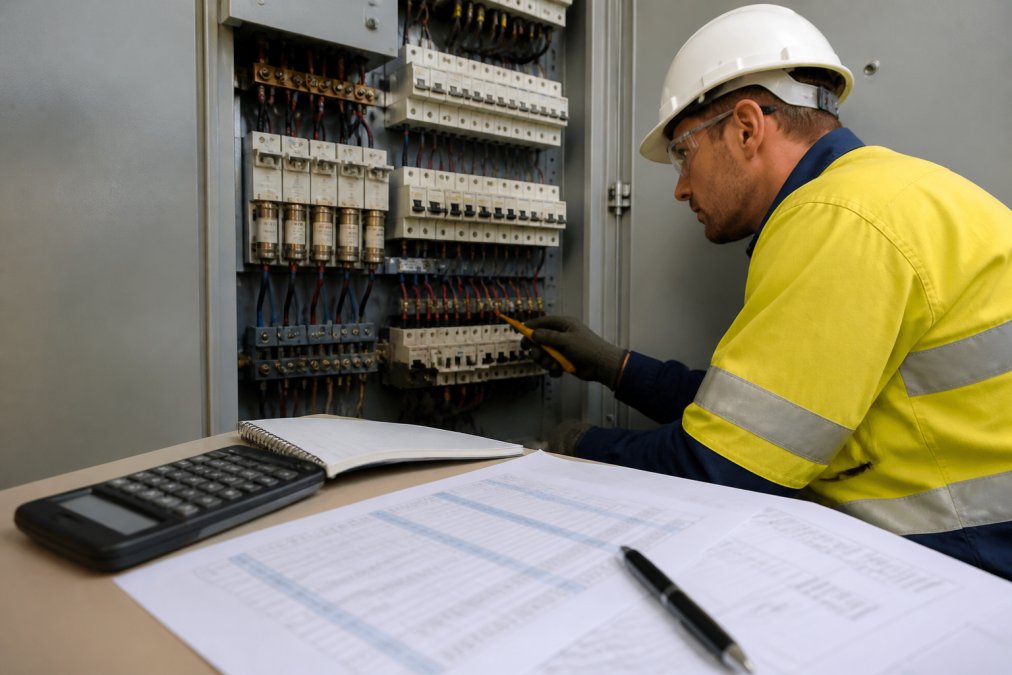
Commercial switchboards cost more because they are engineered, not assembled. A residential board might carry a handful of circuits; a commercial board can carry dozens, with sub-boards feeding separate tenancies or floors.
Three differences drive the gap:
- Current rating. Commercial boards routinely run at ratings a domestic board never sees, which means heavier busbar and larger switchgear.
- Fault level. Higher available fault current demands switchgear rated to interrupt it safely.
- Documentation. Commercial installations need circuit schedules, labelling and metering that a home board does not.
The labour rate is similar; the materials, engineering and testing time are not.
AS/NZS 3000 Compliance Requirements and Their Impact on Pricing
AS/NZS 3000 compliance is not optional, and it is rarely the cheapest part of the job. The Wiring Rules set how installations must be designed, protected and tested, and every compliant upgrade carries that work in its price.
Compliance costs land in three places: the protective devices you must fit, the testing you must document, and remediation of anything non-compliant found during the swap. Older boards often hide ceramic fuses, undersized cabling and unlabelled circuits, all of which must be brought up to standard before sign-off.
A compliance certificate is issued once the work passes inspection. Without it, the installation is not lawful to energise.
RCD Protection, Circuit Breakers and Testing and Tagging
RCD protection is mandatory on specified circuits under the Wiring Rules, and each device adds cost per circuit (Wiring Rules). Circuit breakers replace ceramic fuses and rewireable protection, and must be rated to the cable they protect, not just the load.
Testing and tagging applies to portable equipment, not the board itself, but the same documented testing surrounds the upgrade: fault loop impedance, insulation resistance and polarity all get measured and recorded. Thermal imaging before and after the swap shows which existing circuits were already running hot.
Commercial Electrical Switchboard Replacement Timeline
A straightforward commercial electrical switchboard replacement timeline runs from a few days to several weeks, depending on switchgear lead times and how much of the building must come offline. The schedule is rarely the hard part, the outage windows are, so most planning goes into keeping the business running during changeover.
Here is how the work typically sequences:
| Stage | Typical Duration | What Happens |
|---|---|---|
| Site assessment and load survey | 1-2 days | Load readings, fault level, condition report |
| Design and switchgear procurement | 1-4 weeks | Board layout, device schedule, ordering |
| Isolations and shutdown planning | 1-3 days | Outage windows agreed with the business |
| Installation and changeover | 1-3 days | Remove old board, fit new, terminate |
| Testing and compliance sign-off | 1 day | Fault loop, insulation, certification |
Switchgear lead times are the variable most likely to blow the schedule out. Order early.
Minimising Downtime: A Business Continuity Framework
Downtime never appears on a materials list, and for some operations it dwarfs the electrical work itself. A retail tenancy closed for a Saturday, a cold-storage facility that loses temperature, or a production line stopped mid-batch can each lose more revenue in one outage window than the switchgear costs to buy.
Classify every circuit on the board before you plan the swap:
- Critical, must stay live. Life safety systems, fire pumps, emergency lighting, security, servers, refrigeration, and any process where an interruption causes product loss or a safety risk.
- Essential, can tolerate a short outage. Point-of-sale, general lighting, air-conditioning in occupied areas.
- Deferrable, can go dark for the full window. Storage power, non-essential signage, spare circuits.
Once circuits are classified, three continuity strategies become available:
- Temporary supply. A temporary distribution board or generator feeds critical circuits while the main board is isolated. Common for sites that cannot tolerate any outage, it adds hire, cabling and changeover labour to the quote.
- Phased changeover. The board is rebuilt in stages, one section at a time, so only part of the installation is ever offline. It suits larger boards with multiple sections or sub-boards feeding separate tenancies, spreading cost over more site visits.
- Out-of-hours scheduling. The swap is done overnight, on a weekend, or during a planned shutdown. Labour rates are higher, but revenue impact is usually lower. For a single-line board that cannot be split, this is often the only option.
What Actually Blows the Timeline Out
The durations above assume the site is ready. In practice, four things push commercial switchboard projects past their window:
- Switchgear lead times. Custom-built boards and imported devices can run to several weeks. Standard distribution boards are quicker, but they may not suit a high fault level or a large circuit count.
- Undocumented existing conditions. Asbestos backing, undersized sub-mains, unlabelled circuits and shared neutrals all surface once the enclosure is open, and each one adds a day.
- Network connection approvals. If the supply authority needs to isolate or reconnect at the point of supply, that has to be booked and can add lead time.
- Tenant coordination. In a multi-tenancy building, each tenant's outage window has to be negotiated, and one holdout can delay the whole changeover.
A realistic plan builds contingency into procurement, not installation.
Switchboard Upgrade vs Repair: Which Makes Financial Sense?
Three questions decide it:
Hidden Cost Factors Most Quotes Miss
Asbestos Backing, Labelling and Metering
Insurance, Liability and the Compliance Audit Trail
Phased Upgrade vs Full Replacement: A Decision Framework
Frequently Asked Questions
How much should a switchboard upgrade cost?
Pricing depends on the size of the switchboard, the electrical load it needs to carry, the condition of existing wiring, and whether asbestos backing or metering changes are involved. A small sub-board swap sits at the lower end, while a full three-phase main switchboard replacement with new switchgear, busbar and surge protection sits much higher. Because every site is different, ask for a written quote based on an on-site assessment rather than a phone estimate.
How does AS/NZS 3000 compliance impact upgrade pricing?
AS/NZS 3000 sets the wiring rules that govern fault loop impedance, voltage drop, RCD protection and switchboard labelling. Meeting those requirements can add cost when existing circuits need re-rating, when new safety switches must be fitted to every final sub-circuit, or when the enclosure lacks space for compliant clearances. A switchboard that already meets most requirements will cost less to bring up to standard than one with ceramic fuses and unlabelled circuits.
How long does a commercial electrical switchboard replacement timeline run?
A straightforward like-for-like swap on a small commercial sub-board can be completed in a day. A full main switchboard replacement in an occupied building typically runs over several days to a few weeks once you factor in site assessment, isolation planning, switchgear lead times and staged changeover to keep power on. Buildings with three-phase power, sub-boards or metering changes take longer than single-phase sites.
Is it worth upgrading a switchboard or should I just repair it?
Repair makes sense when the fault is isolated, such as a single failed circuit breaker or a burnt-out main fuse, and the rest of the board meets current standards. Upgrade becomes the better financial call when the board still runs ceramic fuses, has no RCD protection, shows heat damage or corrosion, or cannot carry the electrical demand of new equipment. Repeated faults on the same board usually signal that repair is throwing money at a failing asset.